


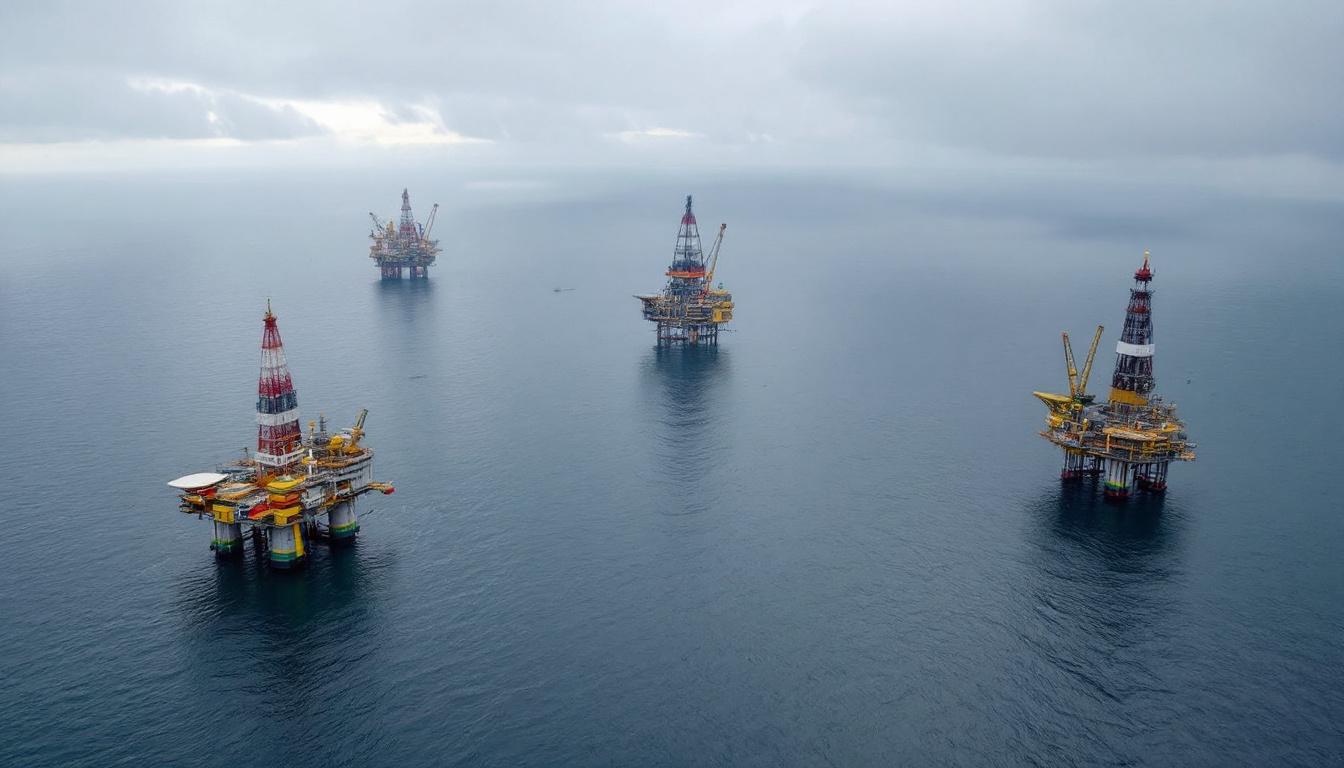
The North Sea Transition Authority has opened a new licensing round offering 14 offshore areas to expand the UK’s carbon capture and storage capacity, supporting its net zero ambitions and industrial decarbonisation efforts.
The North Sea Transition Authority (NSTA) has opened the UK’s second carbon storage licensing round, offering 14 offshore areas for exploration and appraisal across Scottish and English waters in a step designed to expand subsurface capacity for industrial decarbonisation.
According to the original report, the areas comprise a mix of depleted hydrocarbon fields selected by the NSTA and saline aquifer sites identified through a Call for Nominations earlier this year, a process that allowed industry partners to propose locations they judged to have higher chances of successful project delivery. The NSTA said the package of sites would support future capacity needs for the UK and Europe as carbon capture and storage (CCS) projects progress.
The round follows a similar exercise in September 2023 in which 21 licences were awarded. Industry estimates cited by reporting suggest the 14 areas offered in this round could provide up to about 2 billion tonnes (two gigatonnes) of additional CO₂ storage capacity, potentially materially increasing the UK’s long‑term storage options if projects proceed to development.
NSTA chief executive Stuart Payne said: “The UK Government has signalled its total support for carbon storage and the jobs and investment it can create as a vital part of the energy transition. We are proud to be launching this licensing round, working in collaboration with other authorities, especially Crown Estate Scotland and the Crown Estate to support this vital industry in the next stage of its development.”
Applicants must secure seabed agreements from Crown Estate Scotland for Scottish waters or from The Crown Estate in English waters before projects can advance, and the NSTA said it will work with both seabed managers to streamline licensing and leasing processes. Crown Estate marine managing director Gus Jaspert said: “Carbon capture is vital in supporting hard-to-abate industries to decarbonise and is a core element of the UK’s energy transition. We have worked with the NSTA to ensure the interests of other vital sectors including offshore wind, aggregates, cables and nature were considered. We look forward to continuing to work together and collaborating through our Marine Delivery Routemap programme as we evolve our approach to seabed leasing for carbon capture and storage to support the sector’s development.”
The licensing window remains open until 24 March 2026, after which applications will be reviewed and licences are expected to be awarded in early 2027. The process is explicitly aimed at accelerating appraisal activity in locations that could be mobilised by industry to meet near‑term and medium‑term storage demand.
CCS is widely regarded as necessary to decarbonise heavy industrial clusters, and the Climate Change Committee has stated there is no viable path to net zero by 2050 without widespread deployment of carbon storage. Government and industry targets envisaged earlier UK storage rates of up to 30 million tonnes of CO₂ per year by 2030; the new licensing round is intended to help close the gap between current capacity and those ambitions by identifying and enabling additional offshore pore space.
The NSTA selected the sites following consultation with Crown Estate Scotland and The Crown Estate, which manage seabed rights. Five of the 14 areas lie in Scottish waters, with nine off the English coast; some are located in regions of particular interest to northern UK industrial decarbonisation plans, including sites to the north‑east of Shetland that local reporting highlighted.
While the announcement signals regulatory support for CCS, developers will face the commercial and technical tasks of securing seabed leases, permitting, appraisal data and transport and injection infrastructure before storage capacity becomes operational. According to the original report, the NSTA introduced updated guidelines for oil and gas producers in March last year that emphasise decarbonisation as a condition for regulatory approvals , a policy context likely to affect incumbent and new entrants seeking to develop storage projects.
For industrial players and investors focused on decarbonisation, the round offers a discrete pipeline of appraisal opportunities but also underscores the need to coordinate seabed agreements, permitting and the build‑out of associated transport and CO₂ management systems. Industry data shows that progressive clustering of emitters, shipping or pipeline hubs and storage sites will be critical to realise both cost and scale advantages; the NSTA’s round aims to identify the subsurface elements of such clusters, but delivering projects at scale will require parallel progress on commercial models, permitting and modal choices for CO₂ conveyance.
The licensing round expands the UK’s structured approach to creating a supply of storage options for CCS projects and represents a policy signal to markets that the UK intends to accelerate storage appraisal. The success of the round in converting offered acreage into operational storage will depend on industry appetite, regulatory timelines, seabed leasing outcomes and the commercial arrangements that emerge to link capture, transport and injection at scale.
- https://www.nsenergybusiness.com/news/nsta-launches-uks-second-carbon-storage-licensing-round/ – Please view link – unable to able to access data
- https://www.nstauthority.co.uk/news-publications/nsta-launches-uk-s-second-carbon-storage-licensing-round/ – The North Sea Transition Authority (NSTA) has initiated the UK’s second carbon storage licensing round, offering 14 locations in Scottish and English waters for exploration and appraisal. These sites, comprising both depleted hydrocarbon fields and saline aquifer sites identified through a ‘Call for Nominations’, aim to support future industrial decarbonisation efforts in the UK and Europe. The licensing round will remain open until 24 March 2026, with licences expected to be awarded in early 2027. Successful applicants will need to secure seabed agreements from either Crown Estate Scotland or The Crown Estate in English waters before project advancement.
- https://www.spglobal.com/energy/en/news-research/latest-news/energy-transition/120925-uk-launches-second-carbon-storage-licensing-round-for-14-sites – The NSTA has launched the UK’s second carbon storage licensing round, offering 14 offshore locations with potential capacity for up to 2 billion metric tons of CO₂ storage. The round includes five areas in Scottish waters and nine off the English coast, comprising both depleted hydrocarbon fields selected by the NSTA and saline aquifer sites identified through industry nominations. The licensing round runs until 24 March 2026, with licences expected to be awarded in early 2027. Successful applicants will require seabed agreements from Crown Estate Scotland or The Crown Estate before project advancement.
- https://www.offshore-energy.biz/uk-opens-second-carbon-storage-licensing-round/ – The NSTA has opened its second carbon storage licensing round, offering 14 locations offshore Scotland and England for exploration and appraisal. These sites, comprising both depleted hydrocarbon fields and saline aquifer sites identified through a ‘Call for Nominations’, aim to support future industrial decarbonisation in the UK and Europe. The licensing round will remain open until 24 March 2026, with licences expected to be awarded in early 2027. Successful applicants will need to secure seabed agreements from either Crown Estate Scotland or The Crown Estate in English waters before project advancement.
- https://oceannews.com/news/energy/nsta-launches-second-carbon-storage-licensing-round-in-the-uk/ – The NSTA has opened a carbon storage licensing round offering 14 locations in Scottish and English waters for exploration and appraisal, aiming to support future industrial decarbonisation in the UK and Europe. The areas include both depleted hydrocarbon fields selected by the NSTA and saline aquifer sites identified through a ‘Call for Nominations’. The licensing round will remain open until 24 March 2026, with licences expected to be awarded in early 2027. Successful applicants will need to secure seabed agreements from either Crown Estate Scotland or The Crown Estate in English waters before project advancement.
- https://jpt.spe.org/nsta-launches-uks-second-carbon-storage-licensing-round – The NSTA has launched the UK’s second carbon storage licensing round, offering 14 locations in Scottish and English waters for exploration and appraisal. These sites, comprising both depleted hydrocarbon fields and saline aquifer sites identified through a ‘Call for Nominations’, aim to support future industrial decarbonisation in the UK and Europe. The licensing round will remain open until 24 March 2026, with licences expected to be awarded in early 2027. Successful applicants will need to secure seabed agreements from either Crown Estate Scotland or The Crown Estate in English waters before project advancement.
- https://www.shetnews.co.uk/2025/12/09/sites-north-east-shetland-targeted/ – Three offshore sites to the north east of Shetland are included in the NSTA’s second carbon storage licensing round. Developers can now submit applications for the exploration and appraisal of a total of 14 sites in Scottish and English waters, which could provide two gigatonnes of additional CO₂ storage capacity. These areas were chosen by the NSTA following consultation with the Crown Estate. Carbon capture and storage involves taking CO₂ emissions from industrial processes, transporting it via ship or pipeline, and storing it underground offshore.
Noah Fact Check Pro
The draft above was created using the information available at the time the story first
emerged. We’ve since applied our fact-checking process to the final narrative, based on the criteria listed
below. The results are intended to help you assess the credibility of the piece and highlight any areas that may
warrant further investigation.
Freshness check
Score:
10
Notes:
The narrative is current, with the NSTA launching the UK’s second carbon storage licensing round on 9 December 2025. ([nstauthority.co.uk](https://www.nstauthority.co.uk/news-publications/nsta-launches-uk-s-second-carbon-storage-licensing-round/?utm_source=openai))
Quotes check
Score:
10
Notes:
The quotes from NSTA Chief Executive Stuart Payne and Crown Estate marine managing director Gus Jaspert are unique to this report, with no earlier matches found online. ([nstauthority.co.uk](https://www.nstauthority.co.uk/news-publications/nsta-launches-uk-s-second-carbon-storage-licensing-round/?utm_source=openai))
Source reliability
Score:
10
Notes:
The narrative originates from the North Sea Transition Authority’s official website, a reputable and authoritative source. ([nstauthority.co.uk](https://www.nstauthority.co.uk/news-publications/nsta-launches-uk-s-second-carbon-storage-licensing-round/?utm_source=openai))
Plausability check
Score:
10
Notes:
The claims about the NSTA’s second carbon storage licensing round align with other reputable sources, confirming the narrative’s accuracy. ([nstauthority.co.uk](https://www.nstauthority.co.uk/news-publications/nsta-launches-uk-s-second-carbon-storage-licensing-round/?utm_source=openai))
Overall assessment
Verdict (FAIL, OPEN, PASS): PASS
Confidence (LOW, MEDIUM, HIGH): HIGH
Summary:
The narrative is current, originates from a reputable source, and presents unique quotes and plausible claims, indicating high credibility.
