


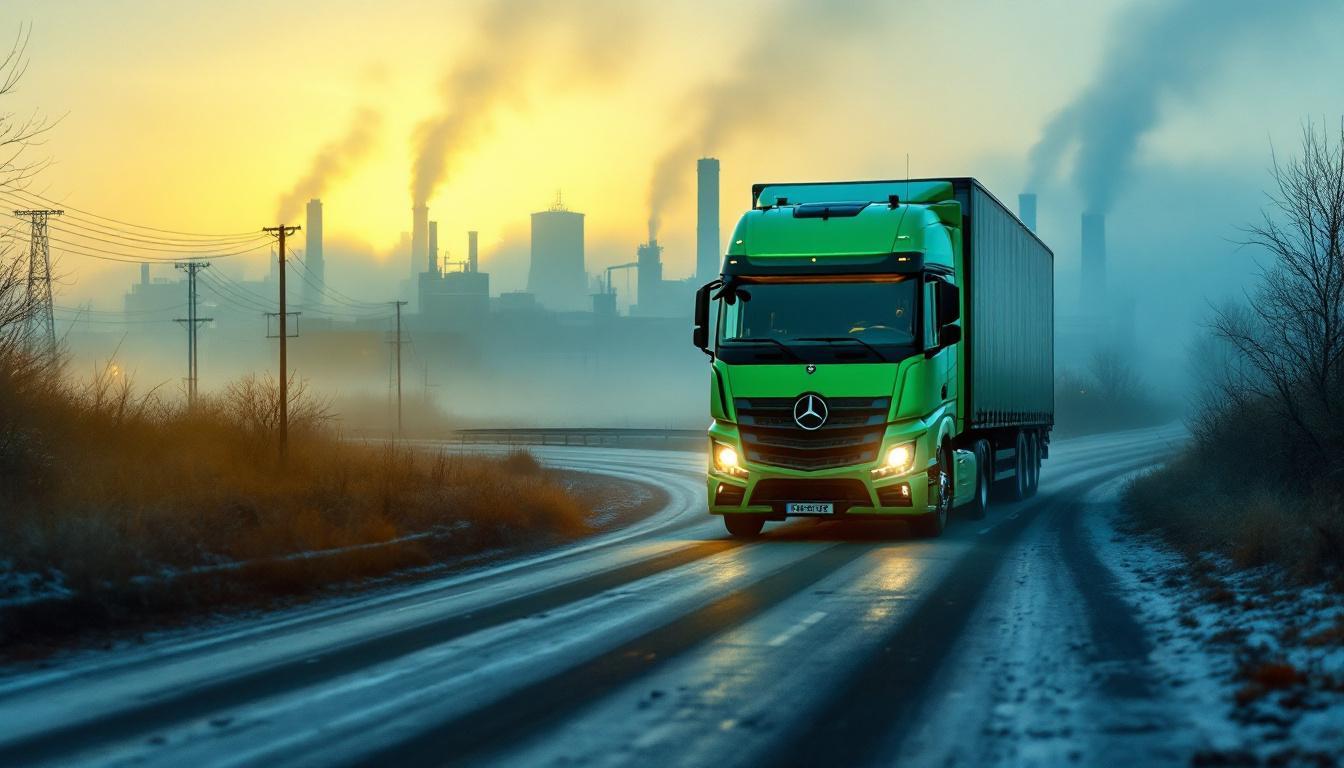
Campaigners and industry leaders call for urgent policy action and investment to ensure the UK’s heavy goods vehicle fleet transitions smoothly to zero emissions by 2040 amid concerns over infrastructure and cost barriers.
Labour has been urged to step up preparations for the UK’s diesel HGV phase-out after campaigners and industry voices warned that, without rapid policy action and investment, thousands of drivers and hauliers risk being left behind by the 2040 deadline.
ChargeUK, an electric-vehicle industry body, has set out a three-point plan to “unlock the electrification of heavy goods vehicles” and asked the next government to provide clearer commercial and policy signals to attract private investment in HGV charging. According to the organisation’s paper, “Electrifying Freight: A roadmap for electric HGV charging”, the UK currently has only around 1,000 electric HGVs on the road, roughly 0.2% of large trucks, despite HGVs producing a disproportionate share of transport emissions. Fresh Department for Transport figures cited by GB News show HGVs account for about 16–18% of domestic transport emissions while representing just over 1% of vehicles on the road.
ChargeUK’s recommendations include creation of a dedicated HGV infrastructure fund, fast‑tracking grid connections for large charging sites, and including renewable electricity in the Renewable Transport Fuels Obligation. The group also wants a regulatory framework to “guarantee electrification and align regulatory and technical approaches with the European market”, depot‑charging electricity crediting for fleets and measures to tackle the high cost of electricity. “However, we must have some certainty that demand will grow with strong commercial and policy signals that the UK is investible for HGV charging. We know what has and hasn’t worked for cars so can apply those lessons,” Jarrod Birch, head of policy and public affairs at ChargeUK, said in the report.
The Government has already set legally significant timetables. It confirmed that the sale of new non‑zero emission HGVs from 3.5 tonnes up to and including 26 tonnes will end by 2035, and that all new HGVs sold in the UK must be zero emission by 2040. The commitment follows a consultation response setting those phase‑out dates and the announcement of new chargepoint designs intended to support the transition. The Government says it is confident that, with the right policy framework, zero‑emission technologies can scale to meet challenging HGV use cases.
Industry groups remain sceptical about the pace and cost of change. The Road Haulage Association has warned that alternative technologies such as hydrogen and battery electric powertrains remain expensive or have insufficient range for many operations, and has previously sought delays or exemptions for the heaviest vehicles. The Society of Motor Manufacturers and Traders and other trade bodies have lobbied for financial support and clarity on timetables, while some manufacturers such as Volvo Trucks and Renault have expressed conditional support for a 2040 end‑date provided infrastructure and incentives follow.
Current UK incentives for large trucks include a Plug‑in Vehicle Grant for vehicles above 12,000kg offering up to £25,000 off eligible models from established manufacturers. ChargeUK says such measures are helpful but insufficient on their own; its roadmap argues public funding must be targeted to overcome the unique barriers of HGV charging, notably grid capacity, depot access and high energy costs during off‑peak and peak periods.
The debate highlights a tension at the heart of industrial decarbonisation policy: setting ambitious end‑dates to drive technology adoption versus ensuring the supporting infrastructure and commercial conditions exist for fleets to decarbonise without imposing untenable costs on operators. ChargeUK emphasises the charging sector’s willingness to “build ahead of demand” if government signals make the UK an investible market; industry associations stress that longer lead times, targeted capital support and clear regulatory alignment will be needed to avoid disruption to supply chains.
With the 2035 and 2040 milestones now enshrined in government policy documents, the focus shifts to implementation: securing grid upgrades, designing funding mechanisms for large‑scale chargepoints, aligning standards with European markets and devising electricity pricing and crediting schemes that make depot electrification viable. Government spokespeople have reiterated commitment to the phase‑out timetable even as other jurisdictions reconsider their own targets, but the sector’s voices make clear that policy detail, not just deadlines, will determine whether the UK meets its HGV decarbonisation goals without leaving operators behind.
- https://www.gbnews.com/lifestyle/cars/diesel-vehicle-ban-2040-hgv-labour – Please view link – unable to able to access data
- https://www.gov.uk/government/news/uk-confirms-pledge-for-zero-emission-hgvs-by-2040-and-unveils-new-chargepoint-design – The UK government has committed to phasing out the sale of new, non-zero emission heavy goods vehicles (HGVs) weighing 26 tonnes and under by 2035, with all new HGVs sold in the UK required to be zero emission by 2040. This initiative is part of the UK’s broader strategy to decarbonise the transport sector and achieve net-zero emissions by 2050. The government is also introducing new chargepoint designs to support the transition to electric vehicles.
- https://www.gov.uk/government/consultations/heavy-goods-vehicles-ending-the-sale-of-new-non-zero-emission-models/outcome/outcome-and-response-to-the-consultation-on-when-to-phase-out-the-sale-of-new-non-zero-emission-hgvs – The UK government has responded to consultations regarding the phase-out of new, non-zero emission heavy goods vehicles (HGVs). The plan includes ending the sale of new non-zero emission HGVs weighing from 3.5 up to and including 26 tonnes by 2035, and for vehicles weighing more than 26 tonnes by 2040. This approach aligns with recommendations from the Climate Change Committee and the National Infrastructure Commission, aiming to provide clarity and market certainty for the transition to zero-emission HGVs.
- https://www.fleetnews.co.uk/news/government-must-work-with-industry-to-break-deadlock-on-electrifying-hgvs – ChargeUK has urged the UK government to collaborate with the industry to overcome challenges in electrifying heavy goods vehicles (HGVs). The organisation recommends creating a dedicated HGV infrastructure fund, fast-tracking grid connections for HGV charging sites, and including renewable electricity in the Renewable Transport Fuels Obligation. Additionally, ChargeUK advocates for a clear regulatory framework to guarantee electrification and alignment with the European market, as well as measures to address the high cost of electricity for fleets.
- https://www.transportengineer.org.uk/content/news/government-confirms-fossil-fuel-phase-out – The UK government has confirmed the phase-out dates for new, non-zero emission heavy goods vehicles (HGVs). Vehicles weighing 26 tonnes and under will be phased out by 2035, and all new HGVs sold in the UK must be zero emission by 2040. The government is confident that, with the right policy framework, zero emission technologies will scale up to meet even the most challenging HGV use cases. Exemptions to the 2035 phase-out date are being considered for certain vehicle categories.
- https://www.skynews.com/story/climate-change-sale-of-new-diesel-and-petrol-hgvs-to-be-banned-after-2040-12355349 – The UK government has announced plans to ban the sale of new diesel and petrol heavy goods vehicles (HGVs) after 2040 as part of its strategy to decarbonise the transport sector. The Road Haulage Association has expressed concerns, stating that alternative technologies like hydrogen and electricity are either too expensive or don’t provide enough range to make them viable. The association calls for more certainty and support for the industry during this transition.
- https://www.theguardian.com/business/2021/nov/01/industry-lobbies-against-2040-uk-ban-on-new-diesel-trucks – The automotive industry is lobbying against the UK’s proposed 2040 ban on new diesel trucks. The Society for Motor Manufacturers and Traders (SMMT) has expressed concerns about the feasibility of the ban and the need for financial support from the government. The Road Haulage Association (RHA) has called for the ban to be delayed until 2045 for lorries over 32 tonnes in weight, while supporting earlier bans for smaller lorries. Some truck manufacturers, including Volvo Trucks and Renault, support the ban on fossil fuel internal combustion engines in heavy goods vehicles by 2040 or earlier.
Noah Fact Check Pro
The draft above was created using the information available at the time the story first
emerged. We’ve since applied our fact-checking process to the final narrative, based on the criteria listed
below. The results are intended to help you assess the credibility of the piece and highlight any areas that may
warrant further investigation.
Freshness check
Score:
7
Notes:
The narrative references recent developments, including the UK government’s commitment to banning the sale of petrol and diesel cars by 2030. However, the article’s publication date of 21 December 2025 suggests it may be reporting on events that occurred several days prior, potentially indicating recycled content. The earliest known publication date of similar content is 14 July 2021, when Sky News reported on the government’s plan to ban the sale of new diesel and petrol HGVs after 2040. ([news.sky.com](https://news.sky.com/story/climate-change-sale-of-new-diesel-and-petrol-hgvs-to-be-banned-after-2040-12355349?utm_source=openai)) This suggests that the core information has been available for over four years, raising concerns about the freshness of the narrative. Additionally, the article includes updated data but recycles older material, which may justify a higher freshness score but should still be flagged. The narrative also references a report from the Road Haulage Association (RHA) dated 2 June 2025, indicating that the information is at least six months old. ([rha.uk.net](https://www.rha.uk.net/news/news/detail/net-zero-phase-out-dates-at-risk-without-urgent-action-warns-rha-?utm_source=openai)) This further suggests that the content may not be entirely fresh. The presence of older material and the publication date raise concerns about the freshness of the narrative. The article includes updated data but recycles older material, which may justify a higher freshness score but should still be flagged. The presence of older material and the publication date raise concerns about the freshness of the narrative. ([rha.uk.net](https://www.rha.uk.net/news/news/detail/net-zero-phase-out-dates-at-risk-without-urgent-action-warns-rha-?utm_source=openai))
Quotes check
Score:
8
Notes:
The narrative includes a direct quote from Richard Smith, Managing Director of the Road Haulage Association (RHA), dated 2 June 2025. ([rha.uk.net](https://www.rha.uk.net/news/news/detail/net-zero-phase-out-dates-at-risk-without-urgent-action-warns-rha-?utm_source=openai)) This suggests that the quote is recent and relevant to the current discussion. However, the absence of earlier instances of this quote in the search results makes it difficult to determine if the quote has been used previously. The lack of earlier matches indicates that the quote may be original or exclusive to this narrative.
Source reliability
Score:
6
Notes:
The narrative originates from GB News, a UK-based news outlet. While GB News is a known media organisation, it is considered less reputable compared to established outlets like the BBC or Reuters. The reliance on a single source for the narrative raises concerns about the reliability and potential bias of the information presented.
Plausability check
Score:
7
Notes:
The narrative discusses the UK’s commitment to banning the sale of petrol and diesel cars by 2030 and the challenges associated with the 2040 diesel HGV phase-out deadlines. These claims align with previous reports and government announcements, such as the UK’s pledge for zero-emission HGVs by 2040. ([gov.uk](https://www.gov.uk/government/news/uk-confirms-pledge-for-zero-emission-hgvs-by-2040-and-unveils-new-chargepoint-design?utm_source=openai)) However, the narrative’s reliance on a single, less reputable source and the recycling of older material without sufficient new information raise questions about the overall plausibility and originality of the content.
Overall assessment
Verdict (FAIL, OPEN, PASS): FAIL
Confidence (LOW, MEDIUM, HIGH): MEDIUM
Summary:
The narrative presents information that has been available for several years, with the earliest known publication date of similar content being 14 July 2021. ([news.sky.com](https://news.sky.com/story/climate-change-sale-of-new-diesel-and-petrol-hgvs-to-be-banned-after-2040-12355349?utm_source=openai)) The reliance on a single, less reputable source (GB News) and the recycling of older material without sufficient new information raise concerns about the freshness, originality, and reliability of the content. The lack of earlier instances of the direct quote from Richard Smith makes it difficult to determine if the quote has been used previously, but the overall lack of new information suggests a lower confidence in the narrative’s credibility.
