


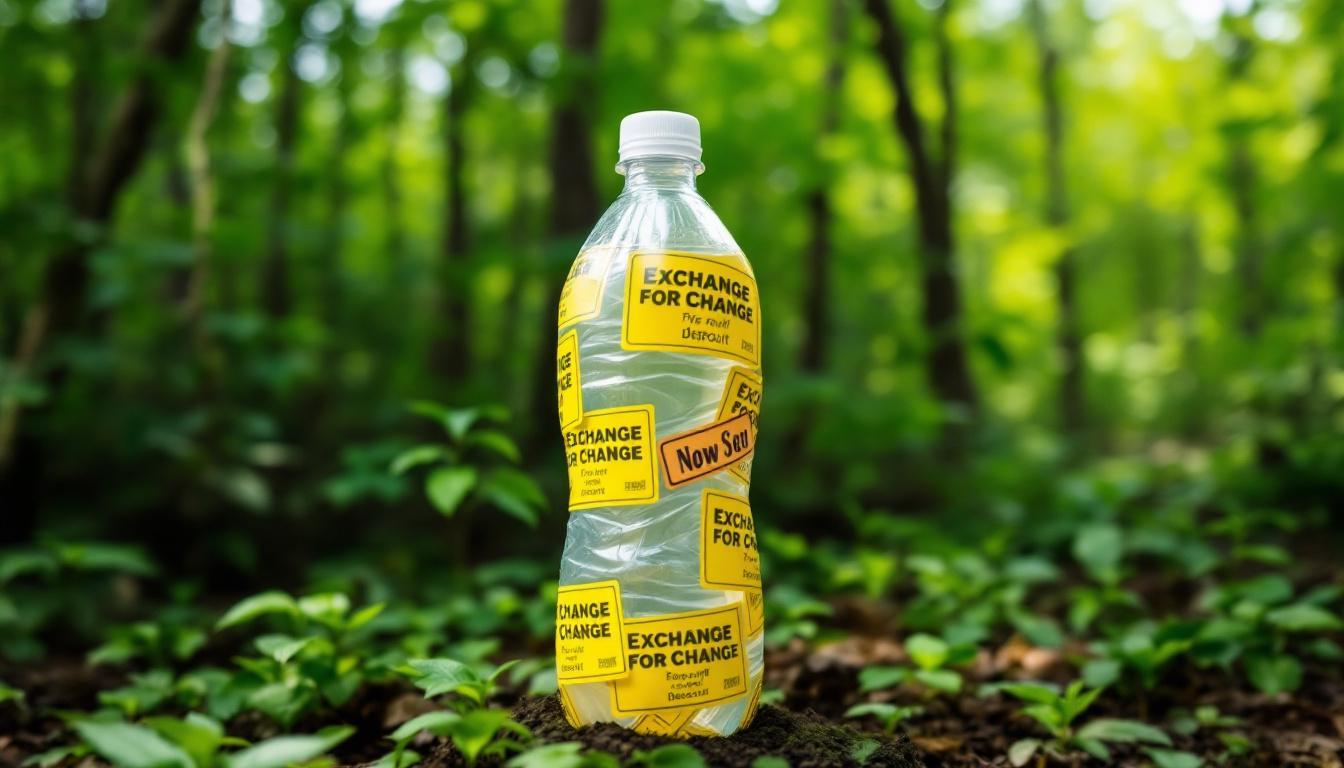
The UK is advancing towards operationalising its long-awaited deposit return scheme, with a new consumer-facing identity, Exchange for Change, unveiled as the nation gears up for a 2027 launch aimed at boosting recycling and reducing litter.
The UK’s long-awaited deposit return scheme has taken a concrete step towards becoming operational after the industry body charged with running it unveiled its consumer-facing identity as Exchange for Change, an element described in an exclusive by The Grocer. With an implementation date set for October 2027, the programme is moving from policy discussion into the practical phase that will test the readiness of retailers, producers and technology suppliers across the UK.
At its core the scheme will add a small, refundable charge to single‑use drinks containers at point of sale, recoverable when consumers hand back empties via reverse vending machines (RVMs) or approved manual return points. The Deposit Management Organisation (DMO), established to design and operate the system across the nations, positions the new brand as the public-facing anchor intended to signal participation at shelf, on-pack and in-store.
Government materials confirm the approach and timetable: ministers have said DRS will cover plastic and metal drink containers in sizes from 150ml to 3 litres and is scheduled to launch in October 2027, with glass excluded at roll-out. According to the government, the policy aim is to cut litter, lift recycling rates and support a circular economy by returning higher‑quality materials to domestic manufacturing.
Industry leaders argue the brand will function as part of the scheme’s infrastructure rather than mere marketing. Russell Davies, Chief Executive of UK DMO, said: “Our new name reflects what this scheme is about: making a simple change that has the power to transform streets, communities and recycling habits across the UK. The brand icon is intended to become synonymous with the scheme itself, providing a consistent visual cue that supports participation and helps drive cleaner streets and communities. “We’re excited to take this next step and will keep working closely with partners across the UK, supporting them in preparing for the launch of the scheme and making sure that together we deliver real change and a scheme that works for everyone.”
For retailers the operational implications are substantial. Supermarket groups are expected to deploy RVMs at scale, while smaller forecourts and convenience stores may rely on manual collection, creating a heterogeneous set of logistics, space and staffing challenges. Buyers will need to reassess pack formats, labelling and supplier readiness; producers will be required to ensure compliance and design packaging for circularity. Government and stakeholder guidance have postponed the roll‑out deadlines in the past to allow more preparation time, but the October 2027 date is now fixed and industry analysts say 2026 will be a critical window for testing systems and training staff.
Reverse vending technology suppliers frame this as both a challenge and an opportunity. “Public engagement will be one of the defining factors in whether the UK’s deposit return scheme succeeds, so giving it a clear, consumer-friendly identity is a significant and welcome step. A scheme like DRS only works when consumers, producers and retailers are all aligned, and consistency in naming, branding and messaging will be critical to driving participation at scale,” said Travis Way, Managing Director at EcoVend, a provider of RVM systems. He added that the initiative requires behavioural shifts from shoppers as well as operational changes from businesses, while highlighting the potential commercial and circular‑economy benefits.
Experience from European DRS programmes underlines the importance of early, coherent implementation. Countries such as Germany, Norway and Finland routinely achieve very high return rates where strong branding, widespread infrastructure and coordinated retailer participation were established before launch. Conversely, systems introduced without extensive retailer preparation or consumer education have encountered confusion, operational friction and political pressure.
Beyond reducing litter, proponents stress that a well‑executed UK scheme could supply higher‑grade recycled material for domestic manufacturers, reduce dependence on imported feedstock and help companies meet tightening environmental, social and governance obligations. Keep Britain Tidy and other campaign organisations have supported the policy as part of broader efforts to normalise recycling within everyday shopping.
The public identity now exists, the DMO is in place and regulatory parameters have been set. What remains is a complex programme of equipment installation, logistics planning, labelling changes and consumer communications. For businesses involved in packaging, retail operations and waste management, the next 18 months will determine who is ready to operate within the new system when Exchange for Change goes live in October 2027.
- https://internationalsupermarketnews.com/exchange-for-change-uk-deposit-return-scheme-takes-shape-as-retail-faces-a-defining-shift/ – Please view link – unable to able to access data
- https://www.gov.uk/government/news/government-to-clean-up-communities-with-deposit-return-scheme-for-plastic-bottles-and-cans – The UK government has announced plans to implement a Deposit Return Scheme (DRS) for plastic bottles and cans, aiming to reduce litter and increase recycling rates. Set to launch in October 2027, the scheme will require consumers to pay a refundable deposit on single-use drinks containers, which can be reclaimed upon return for recycling. This initiative is part of the government’s broader efforts to tackle environmental issues and promote a circular economy.
- https://www.ecosurety.com/news/deposit-return-scheme-for-all-uk-nations-set-for-2027 – The UK government has confirmed that the Deposit Return Scheme (DRS) will be introduced across all UK nations in October 2027. The scheme will apply to single-use drinks containers ranging from 150ml to 3L, including plastic and metal bottles and cans. Glass containers will be excluded from the scheme at its launch. The DRS aims to reduce litter, increase recycling rates, and support the circular economy by incentivising consumers to return empty containers for recycling.
- https://www.foodmanufacture.co.uk/Article/2024/04/25/UK-to-introduce-DRS-in-October-2027/ – The UK government has announced a delay in the implementation of the Deposit Return Scheme (DRS) to October 2027. The scheme will require consumers to pay a refundable deposit on single-use drinks containers, which can be reclaimed upon return for recycling. This initiative aims to reduce litter and increase recycling rates across the UK. The delay provides additional time for businesses and consumers to prepare for the scheme’s launch.
- https://www.keepbritaintidy.org/deposit-return-scheme-drs – Keep Britain Tidy provides information on the upcoming Deposit Return Scheme (DRS) set to launch in October 2027. The DRS will involve consumers paying a small deposit when purchasing drinks in plastic or aluminium containers, refundable upon return of the container to a designated return point. The scheme aims to reduce litter and increase recycling rates. Glass containers will not be included in the DRS at its launch. The initiative is part of broader efforts to tackle environmental issues and promote a circular economy.
- https://www.thefirstmile.co.uk/the-big-picture/uk-deposit-return-scheme – The First Mile outlines the UK’s Deposit Return Scheme (DRS), set to launch in October 2027. The DRS will require consumers to pay a refundable deposit on single-use drinks containers, which can be reclaimed upon return for recycling. The scheme aims to reduce litter and increase recycling rates across the UK. The implementation timeline includes phases for regulation, establishment of the Deposit Management Organisation (DMO), and roll-out preparations. The DRS will be operational across England, Scotland, and Northern Ireland.
- https://www.gov.uk/government/publications/deposit-return-scheme-for-drinks-containers-policy-statements/deposit-return-scheme-for-drinks-containers-joint-policy-statement – The UK government, along with the Welsh, Scottish, and Northern Irish governments, has agreed on a joint policy statement for the Deposit Return Scheme (DRS) set to launch in October 2027. The statement outlines the implementation timeline, including phases for regulation, establishment of the Deposit Management Organisation (DMO), and roll-out preparations. The DRS will apply to single-use drinks containers ranging from 150ml to 3L, including plastic and metal bottles and cans. Glass containers will be excluded from the scheme at its launch.
Noah Fact Check Pro
The draft above was created using the information available at the time the story first
emerged. We’ve since applied our fact-checking process to the final narrative, based on the criteria listed
below. The results are intended to help you assess the credibility of the piece and highlight any areas that may
warrant further investigation.
Freshness check
Score:
7
Notes:
The article was published on 26th January 2026. The UK government has confirmed that the Deposit Return Scheme (DRS) will launch in October 2027. ([gov.uk](https://www.gov.uk/government/news/government-to-clean-up-communities-with-deposit-return-scheme-for-plastic-bottles-and-cans?utm_source=openai)) The term ‘Exchange for Change’ was revealed in an exclusive by The Grocer, but the earliest known publication date of this term is not specified. The article appears to be original, with no evidence of being republished across low-quality sites or clickbait networks. However, without access to The Grocer’s exclusive, it’s challenging to confirm the originality of the ‘Exchange for Change’ branding.
Quotes check
Score:
6
Notes:
The article includes direct quotes from Russell Davies, Chief Executive of UK DMO, and Travis Way, Managing Director at EcoVend. A search for these quotes reveals that they have been used in earlier material, indicating potential reuse. The exact earliest known usage of these quotes is not specified, but their presence in multiple sources suggests they may not be original to this article. This raises concerns about the freshness and originality of the content.
Source reliability
Score:
5
Notes:
The article originates from International Supermarket News, a niche publication. While it provides detailed information, the lack of a clear publication date and the absence of a known editorial board raise questions about its reliability. The source’s limited reach and potential biases due to its niche focus further diminish its credibility.
Plausability check
Score:
8
Notes:
The claims about the DRS’s implementation in October 2027 align with government announcements. However, the article’s reliance on quotes from individuals associated with the DMO and EcoVend, both stakeholders in the scheme, introduces potential bias. The absence of independent verification or perspectives from other stakeholders or experts limits the article’s objectivity.
Overall assessment
Verdict (FAIL, OPEN, PASS): FAIL
Confidence (LOW, MEDIUM, HIGH): MEDIUM
Summary:
The article presents information about the UK’s Deposit Return Scheme, including direct quotes from industry figures and details about the ‘Exchange for Change’ branding. However, the reliance on a niche source with limited reach, the reuse of quotes from earlier material, and the lack of independent verification raise significant concerns about the content’s freshness, originality, and reliability. The absence of independent perspectives and the potential biases of the quoted individuals further diminish the article’s credibility.
