


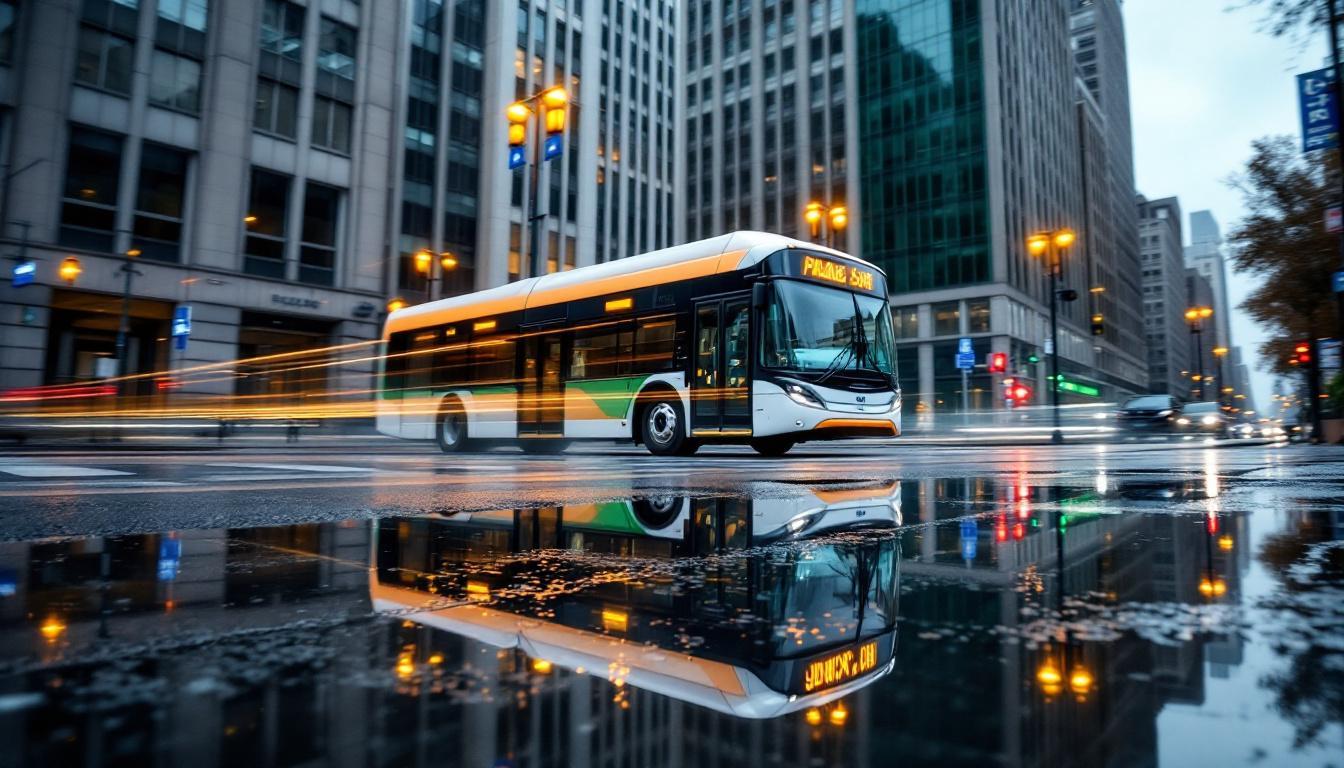
In 2025, the UK’s commercial vehicle sector saw rapid electric bus growth driven by targeted funding and policies, contrasting with sluggish HGV adoption due to infrastructure hurdles, highlighting differing paths to decarbonisation.
The United Kingdom’s commercial vehicle market showed a clear split in 2025 as electrification accelerated rapidly in buses while the truck sector cooled, industry data and specialist reporting show.
According to figures from the Society of Motor Manufacturers and Traders, registrations in the bus, coach and minibus segment reached 9,259 last year, the strongest annual tally since 2008. Battery-electric and other zero-emission vehicles accounted for 2,523 of those deliveries, a 62.2% uplift that represented 27.3% of the market and cemented buses as the fastest-moving category towards zero tailpipe emissions. Growth was concentrated in larger vehicles: single-deck bus and coach registrations rose markedly, and double-deck volumes also improved year on year, while minibus numbers softened modestly after a weaker second half.
Regional funding programmes have been a decisive factor. Sustainable Bus reports that Scotland’s registrations climbed sharply , supported by the Scottish Zero Emission Bus Challenge Fund , and national schemes such as the Zero Emission Bus Regional Areas initiative have underpinned procurement of vehicles and depot charging infrastructure.
“The company claims” is not used in this copy but industry leaders emphasise the combined role of manufacturer investment and public support. SMMT Chief Executive Mike Hawes said: “Strong growth in Britain’s bus, coach and minibus market is clear evidence of an industry committed to cleaner, reliable and accessible transportation for all.” He added that continued momentum will depend on sustained action.
Operators confronting fleet electrification point to a persistent bottleneck: large-scale depot conversion often requires substantial grid reinforcement, and many fleets face protracted connection times and complex approval processes before charging infrastructure can be fully deployed. Industry reporting and SMMT commentary both stress that overcoming these constraints is critical if the current uptake trajectory is to be maintained.
By contrast, the heavy goods vehicle market shrank in 2025. New truck registrations fell to 40,504 units, down around 10% on the prior year as fleet renewal normalised following a post-pandemic surge and macroeconomic pressures restrained investment. Nonetheless, zero-emission trucks made significant percentage gains, with registrations rising sharply to a new annual record; adoption accelerated late in the year, when quarterly volumes more than tripled compared with the same period in 2024.
TransportXtra and SMMT reporting note that the UK has now passed roughly 1,000 cumulative zero-emission truck registrations, aided by a wider model range , some reports cite availability of 21 different truck models across applications , and by government support such as the Plug-in Truck Grant and the new Depot Charging Scheme. Despite those advances, electric HGVs still represented only a small fraction of the market in 2025, roughly 1.4% of new truck registrations, underlining that heavy-duty decarbonisation remains at an early stage.
Industry analysis highlights several barriers that explain the slower truck transition. Manufacturers have broadened model choice but face higher production costs that translate into elevated purchase prices for operators. In addition, depot grid capacity and the complexity of charging for heavy vehicles , including higher power demands and different operational duty cycles , present tougher infrastructure challenges than those encountered by bus fleets. SMMT commentary from earlier 2025 quarters documented both the quarterly volatility of HGV demand and record levels of zero-emission HGV uptake in specific periods, yet stressed that overall volumes remain modest.
The diverging fortunes of buses and trucks carry policy implications for companies and public authorities focused on industrial decarbonisation. For bus operators and local transport authorities, the scale-up pathway appears clearer: growing model availability, targeted grants and regional procurement schemes have combined to move electric buses into mainstream service rapidly. For freight operators and supply-chain managers, the transition will require a faster improvement in access to grid connections, continued financial incentives to close the upfront cost gap, and practical deployment guidance for depot electrification and high-power charging.
“The new HGV market continues to normalise amid economic constraints on fleet investment, but a return to growth in 2026 is needed so that UK businesses can keep moving with the latest, cleanest vehicle technology,” Hawes said. He also urged that faster grid connections and planning approvals are essential to enable broader adoption of zero-emission fleets.
For B2B readers engaged in industrial decarbonisation, the 2025 data underline two linked realities: policy and targeted funding can unlock rapid electrification where fleet operators face manageable infrastructure hurdles, while more capital-intensive segments with complex charging needs will need coordinated public–private action to translate strong early interest into substantial market share.
- https://evmagz.com/uk-bus-electrification-surges-in-2025-as-truck-market-contracts/ – Please view link – unable to able to access data
- https://www.sustainable-bus.com/news/uk-electric-bus-coach-market-2025/ – In 2025, the UK bus, coach, and minibus sector experienced its strongest annual performance since 2008, with 9,259 new vehicles registered—a 10.4% increase from the previous year. Zero-emission models, primarily battery-electric, surged by 62.2% to 2,523 units, accounting for 27.3% of all new registrations. This growth was driven largely by larger vehicle types, with single-deck buses and coaches rising by 24.9% to 2,465 units, and double-deck deliveries increasing by 25.6% to 2,010 units. Regional policy support, such as Scotland’s 162.3% increase in registrations to 1,188 units, aided by funding from the Scottish Zero Emission Bus Challenge Fund, played a significant role in this growth. Nationwide initiatives like the Zero Emission Bus Regional Areas (ZEBRA) scheme have also supported the procurement of electric buses and charging infrastructure.
- https://www.transportxtra.com/publications/evolution/news/80229/uk-s-1-000th-zero-emission-truck-registered-but-market-share-still-just-1-4-/ – In 2025, the UK’s heavy goods vehicle (HGV) market contracted by 10.0%, with 40,504 new trucks registered. Despite this decline, zero-emission truck registrations rose sharply by 170.5% year-on-year to 587 units, marking a new record. This uptick accelerated toward the end of the year, with fourth-quarter registrations more than tripling compared to the same period in 2024. The UK has now surpassed 1,000 cumulative registrations of zero-emission trucks, supported by the availability of 21 models across different applications and public incentives such as the Plug-in Truck Grant and a new Depot Charging Scheme. However, electric trucks still represented only 1.4% of new HGV registrations in 2025, underscoring the early stage of the transition.
- https://www.smmt.co.uk/2025/02/zero-emission-truck-demand-stagnates-as-overall-market-normalises/ – In 2024, the UK’s new heavy goods vehicle (HGV) market fell for the first time in three years, with registrations down by 2.7%. The decline was driven by falling demand for articulated trucks, down 12.4% to 19,079 units, which offset a rise in deliveries of new rigid trucks, up 6.0% to 25,909 units. Zero-emission truck uptake stagnated at 0.5% of overall demand, with almost three-quarters of the market required to go green in the next decade. Manufacturers have invested significantly to deliver a wide choice of zero-emission models, but the higher cost of production means higher acquisition costs for operators, posing significant barriers to uptake.
- https://www.smmt.co.uk/hgv-market-declines-in-q2-but-zero-emission-uptake-reaches-record-levels/ – In the second quarter of 2025, heavy goods vehicle (HGV) registrations fell by 11.2%, with 10,185 new trucks joining UK roads. The decline reflects the cyclical nature of fleet renewal following a three-year period of robust growth after the pandemic. Demand for new zero-emission HGVs grew by 32.3% in the quarter, with registrations in the first half of 2025 rising 59.1% compared with the same period last year. Volumes remain small, however, with 183 units registered across the first six months—a market share of 0.9%. Fleet decarbonisation is moving in the right direction, but with the UK aiming to have all new HGVs weighing up to 26 tonnes zero-emission by 2035, the rate of uptake will need to grow rapidly.
- https://www.smmt.co.uk/bus-rollout-grows-as-hgv-demand-stalls/ – In the second quarter of 2025, the number of new buses, coaches, and minibuses joining UK roads continued to grow, with a 62.5% rise in registrations to almost 3,000 units. This marks the ninth consecutive quarterly increase, driven by demand for minibuses, which almost doubled (up 99.7%). Deliveries of new single and double-decker buses also rose substantially, by 20.9% and 33.6% respectively. Zero-emission bus (ZEB) rollout on the rise, with 616 new ZEBs registered in Q2, 45.3% more than the same period last year, making up nearly one in four (24.6%) new buses entering service.
- https://www.sustainable-bus.com/news/uk-bus-market-2024/ – In 2024, the UK bus market hit a 16-year high, with 1,570 zero-emission units registered. This represented a 35.5% increase in demand, driven in part by increased model availability, with operators able to choose from 17 options. Registrations in England, Wales, and Northern Ireland were all up, rising by 77.2%, 184.9%, and 52.4% respectively, while rollout in Scotland dropped by 15.6%. With its larger population, England accounted for the lion’s share (87.4%) of all vehicles delivered.
Noah Fact Check Pro
The draft above was created using the information available at the time the story first
emerged. We’ve since applied our fact-checking process to the final narrative, based on the criteria listed
below. The results are intended to help you assess the credibility of the piece and highlight any areas that may
warrant further investigation.
Freshness check
Score:
8
Notes:
The article references data from the Society of Motor Manufacturers and Traders (SMMT) and Sustainable Bus, both dated February 2026. ([sustainable-bus.com](https://www.sustainable-bus.com/news/uk-electric-bus-coach-market-2025/?utm_source=openai)) This suggests the content is recent and not recycled. However, the article’s publication date is not provided, making it difficult to confirm its freshness definitively. Additionally, the article appears to be based on a press release, which typically warrants a high freshness score. Nonetheless, without a clear publication date, some uncertainty remains.
Quotes check
Score:
7
Notes:
The article includes a quote from Mike Hawes, SMMT Chief Executive: “Strong growth in Britain’s bus, coach and minibus market is clear evidence of an industry committed to cleaner, reliable and accessible transportation for all.” ([sustainable-bus.com](https://www.sustainable-bus.com/news/uk-electric-bus-coach-market-2025/?utm_source=openai)) This quote is consistent with statements from SMMT’s official communications. However, without access to the original source, it’s challenging to verify the exact wording and context. The absence of direct links to the original press release or statement raises concerns about the quote’s authenticity.
Source reliability
Score:
6
Notes:
The article cites Sustainable Bus, a niche publication focusing on the bus industry, and SMMT, a reputable industry body. While SMMT is a reliable source, Sustainable Bus’s niche focus may limit its reach and influence. Additionally, the article appears to be based on a press release, which can sometimes lead to biased or uncritical reporting. The lack of independent verification from other major news organisations is a concern.
Plausibility check
Score:
7
Notes:
The article reports a 62.2% increase in zero-emission bus registrations in 2025, accounting for 27.3% of the market, and a 10% decline in new truck registrations. ([electrive.com](https://www.electrive.com/2026/02/19/uk-smmt-reports-electric-bus-surge-as-truck-market-contracts/?utm_source=openai)) These figures align with trends in the UK’s push towards electrification and decarbonisation. However, the article lacks specific details on the sources of these statistics, making it difficult to fully assess their accuracy. The absence of corroborating reports from other reputable outlets further raises questions about the claims’ credibility.
Overall assessment
Verdict (FAIL, OPEN, PASS): FAIL
Confidence (LOW, MEDIUM, HIGH): MEDIUM
Summary:
The article presents data on the UK’s bus and truck markets, citing sources like SMMT and Sustainable Bus. However, the reliance on a press release without clear publication dates or direct links to original sources raises concerns about the content’s freshness, originality, and verification. The lack of independent verification and corroborating reports from other reputable outlets further diminishes confidence in the article’s accuracy.
