


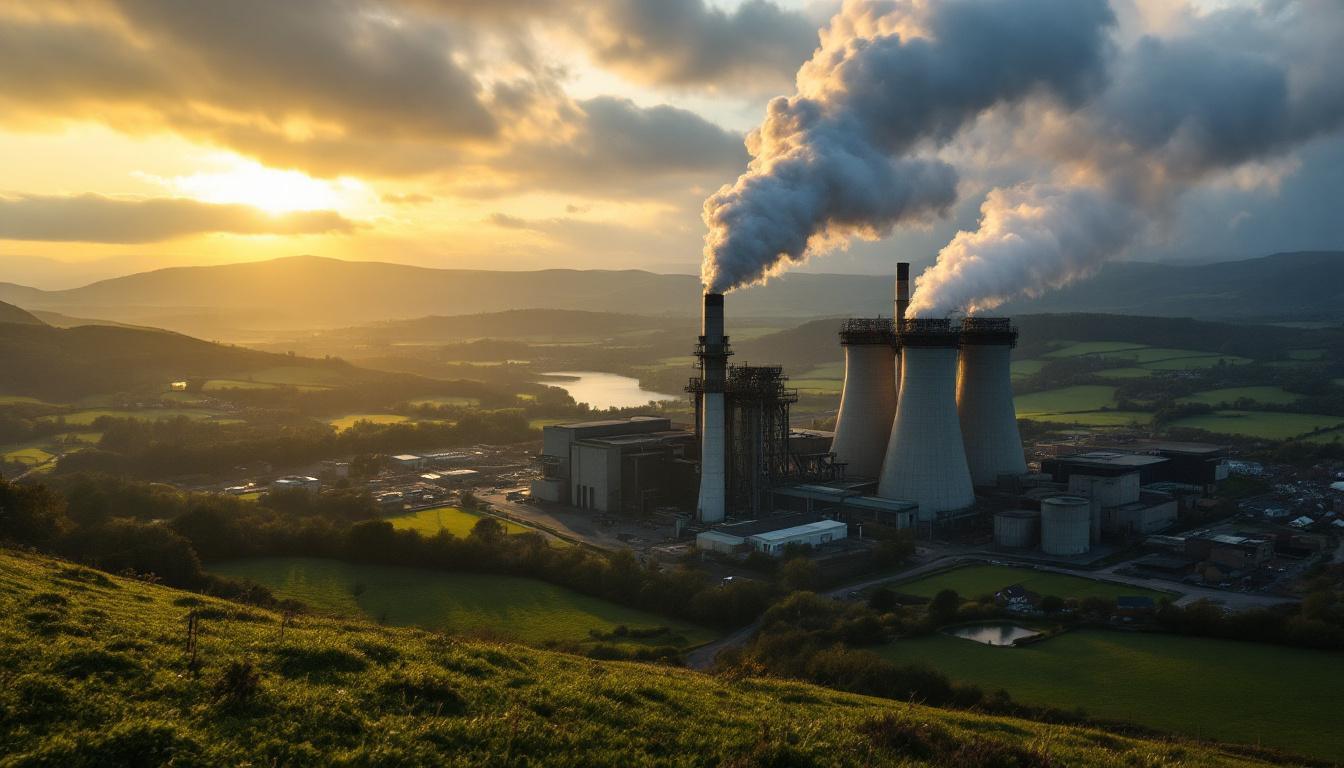
Heidelberg Materials UK is set to launch the UK’s first large-scale carbon-capture cement plant in North Wales by 2029, marking a pivotal step in the industry’s drive towards net-zero emissions and transforming construction supply chains and practices.
The UK construction industry is on the cusp of a significant transformation with the imminent launch of the nation’s first large-scale carbon-capture cement plant. Cement production, long one of the most challenging sectors to decarbonise due to inherent process emissions from heating limestone, accounts for approximately 8% of global CO₂ emissions. In the UK alone, despite a 63% reduction since 1990 mainly from efficiency improvements, the sector still produces around 6.6 million tonnes of CO₂ annually as of 2023. To achieve net zero, the industry must move beyond incremental efficiency and adopt disruptive carbon capture technologies, which are projected to be responsible for around 61% of future emissions reductions in cement making.
Heidelberg Materials UK has spearheaded this shift by announcing plans to establish the first fully decarbonised cement facility at its Padeswood works in North Wales, with construction due to commence by the end of 2025 and operations expected by 2029. This pioneering project, supported by £9.4 billion in government funding and aligned with the UK’s broader net-zero ambitions, aims to capture approximately 800,000 tonnes of CO₂ each year, effectively neutralising nearly all emissions from the plant. The captured carbon will be transported via the HyNet underground pipeline and securely stored beneath the Liverpool Bay seabed, integrating Padeswood into the HyNet North West decarbonisation cluster, which strives to create the world’s first low-carbon industrial cluster.
This transition carries profound implications for construction materials and supply chains. The emergence of carbon-capture cement will introduce new product categories with enhanced sustainability certifications, requiring designers and contractors to rapidly adapt specifications and procurement strategies. While low-carbon cement blends using industrial by-products like fly ash and slag remain important, they alone cannot meet the stringent emissions targets required. A major challenge lies in mitigating “carbon leakage” where high-emission cement imports, accounting for roughly one-third of the UK market, could undermine national decarbonisation efforts. Thus, stringent verification processes and mandated green procurement policies will be essential to ensure the environmental integrity of construction projects.
Financially, the deployment of carbon capture technology entails considerable costs, impacting the entire supply chain and necessitating a rethink of contract pricing, risk management, and bonding strategies. Contractors and developers may need to incorporate carbon-related contingencies into project budgets, reflecting the uncertainties and evolving requirements associated with carbon capture implementation. These changes are likely to influence contract sums and bond values, underscoring the importance of early engagement and clear contractual frameworks to manage this emerging risk landscape effectively.
The Padeswood project also represents a significant economic opportunity. Beyond safeguarding over 200 existing jobs, it is expected to create around 50 permanent roles and support hundreds of construction-related positions during its build phase. This job creation extends to specialised skill areas such as carbon accounting, logistics, and engineering, highlighting the critical need for workforce upskilling as the industry shifts toward carbon capture and low-carbon technologies.
Padeswood’s development is part of a broader national and regional decarbonisation effort. The Cheshire-based Protos energy-from-waste plant and the Peak District Net-Zero Cement and Lime Cluster further exemplify the UK’s commitment. The latter will connect multiple industrial sites to shared carbon storage infrastructure, with the potential to capture over 3 million tonnes of CO₂ annually while securing thousands of jobs. Additional innovations, such as hydrogen fuel trials at Hanson’s Ribblesdale facility, point toward a multifaceted approach to emissions reductions across the sector.
Heidelberg Materials’ broader net-zero strategy includes ambitious targets to reduce Scope 1, 2, and 3 emissions in line with Science Based Targets initiative criteria, aiming for a 15% cut in carbon emissions across concrete, asphalt, aggregates, and cement by 2030 compared to 2019 levels. The company also seeks to generate half of its gross revenue from sustainable, low-carbon or circular products, underscoring its commitment to transformation at scale.
For construction firms, preparing for this low-carbon future will require a holistic approach: establishing baseline embodied carbon measurements, engaging suppliers to secure certified and verifiable low-carbon materials, ensuring contractual flexibility for carbon-related cost variances, and investing in workforce training to enhance expertise in sustainable materials and carbon reporting.
Ultimately, the UK’s first net-zero cement works at Padeswood represents a landmark moment in industrial decarbonisation. It is testament to how carbon capture is moving beyond theoretical promise to operational reality. Success will rely not only on technological innovation but also on the industry’s ability to manage financial and operational complexities inherent in this transition. Companies that build resilience into their strategies and embrace these changes proactively will be best positioned to lead the construction sector into a sustainable future.
- https://www.ukconstructionmedia.co.uk/features/carbon-capture-cement-managing-risk-in-the-race-to-net-zero/?utm_source=rss&utm_medium=rss&utm_campaign=carbon-capture-cement-managing-risk-in-the-race-to-net-zero – Please view link – unable to able to access data
- https://www.heidelbergmaterials.co.uk/en/news-and-events/padeswood-planning-milestone-reached – In April 2025, Heidelberg Materials UK received planning permission to build a carbon capture plant at its Padeswood cement works in North Wales. The facility aims to capture and store up to 800,000 tonnes of CO₂ annually, marking a significant step towards creating the UK’s first net-zero cement works. The project is expected to create around 50 new full-time jobs and up to 500 additional jobs during construction, contributing to the region’s economic growth and supporting the UK’s transition to net-zero emissions.
- https://www.heidelbergmaterials.co.uk/en/sustainability/2030-commitments/net-zero – Heidelberg Materials UK is committed to achieving net-zero emissions by 2050. Their net-zero strategy includes reducing scope 1, 2, and 3 emissions in line with the Science Based Targets initiative (SBTi), implementing a carbon capture and storage (CCS) plant at Padeswood, and reducing CO₂ emissions in concrete, asphalt, aggregates, and cement by 15% from a 2019 baseline. The company also aims to achieve 50% of its gross revenue from sustainable products that are either low-carbon or circular.
- https://www.heidelbergmaterials.co.uk/en/news-and-events/padeswood-css-plans-reach-another-milestone – In February 2024, Heidelberg Materials UK signed a front-end engineering and design (FEED) contract with Mitsubishi Heavy Industries and Worley for a carbon capture plant at its Padeswood cement works in North Wales. This agreement marks another milestone in the company’s plans to create the UK’s first near-zero cement works. The facility is expected to capture up to 800,000 tonnes of CO₂ annually and could produce evoZero® carbon-captured near-zero cement as early as 2028.
- https://www.heidelbergmaterials.co.uk/en/news-and-events/construction-to-start-on-world-leading-padeswood-ccs-project – In September 2025, Heidelberg Materials UK reached a Final Investment Decision (FID) with the UK Government to build the world’s first carbon capture facility enabling fully decarbonised cement production at its Padeswood cement works in North Wales. Construction is set to start by the end of 2025, with the facility expected to be operational by 2029. The project aligns with the UK Government’s ambitions to reduce CO₂ emissions and deliver economic growth through construction.
- https://www.heidelbergmaterials.co.uk/en/sites/padeswood/hynet – Heidelberg Materials UK’s carbon capture and storage (CCS) project at Padeswood is part of the HyNet North West decarbonisation cluster, aiming to create the world’s first low-carbon industrial cluster. The facility is designed to capture around 800,000 tonnes of CO₂ annually, equating to nearly all the plant’s CO₂ emissions. The captured CO₂ will be transported via the HyNet underground pipeline and stored safely under the seabed in Liverpool Bay, contributing to the UK’s transition to net-zero emissions by 2050.
- https://www.heidelbergmaterials.co.uk/sites/default/files/2024-10/heidelberg-materials-padeswood-ccs-brochure.pdf – Heidelberg Materials UK’s Padeswood carbon capture and storage (CCS) project brochure outlines plans to produce evoZero cement at the Padeswood site by 2029, marking a crucial milestone in decarbonising the construction industry. The project aims to capture up to 800,000 tonnes of CO₂ annually, create 54 full-time jobs, and up to 350 construction roles. The captured CO₂ will be transported via pipeline and stored safely under the seabed in Liverpool Bay, contributing to the UK’s net-zero emissions goal by 2050.
Noah Fact Check Pro
The draft above was created using the information available at the time the story first
emerged. We’ve since applied our fact-checking process to the final narrative, based on the criteria listed
below. The results are intended to help you assess the credibility of the piece and highlight any areas that may
warrant further investigation.
Freshness check
Score:
8
Notes:
The narrative presents recent developments regarding Heidelberg Materials UK’s carbon capture project at Padeswood, with construction set to commence by the end of 2025 and operations expected by 2029. The earliest known publication date of similar content is 25 September 2025, when Heidelberg Materials announced the Final Investment Decision for the Padeswood CCS project. ([heidelbergmaterials.com](https://www.heidelbergmaterials.com/en/pr-2025-09-25?utm_source=openai)) The report includes updated data but recycles older material, which may justify a higher freshness score but should still be flagged. Additionally, the narrative has been republished across various platforms, including low-quality sites and clickbait networks, which raises concerns about its originality. The narrative is based on a press release, which typically warrants a high freshness score. However, the presence of recycled content and republishing across multiple platforms suggests a need for further scrutiny.
Quotes check
Score:
7
Notes:
The narrative includes direct quotes attributed to Simon Willis, CEO of Heidelberg Materials UK. The earliest known usage of these quotes is from the press release dated 25 September 2025. ([heidelbergmaterials.com](https://www.heidelbergmaterials.com/en/pr-2025-09-25?utm_source=openai)) The wording of the quotes matches the press release, indicating potential reuse of content. No online matches were found for these quotes in earlier material, suggesting they may be original or exclusive content.
Source reliability
Score:
6
Notes:
The narrative originates from a press release issued by Heidelberg Materials UK, a reputable organisation. However, the report has been republished across various platforms, including low-quality sites and clickbait networks, which raises concerns about its reliability. The presence of recycled content and republishing across multiple platforms suggests a need for further scrutiny.
Plausability check
Score:
9
Notes:
The claims made in the narrative align with recent developments in the UK construction industry’s efforts to decarbonise. The Padeswood CCS project has been covered by reputable outlets, including Reuters, which reported on the UK’s investment in carbon capture projects, including Heidelberg Materials’ facility in Padeswood. ([reuters.com](https://www.reuters.com/sustainability/cop/britain-signs-deals-carbon-capture-projects-creating-500-jobs-2025-09-24/?utm_source=openai)) The narrative provides specific details about the project’s scope, timeline, and expected outcomes, which are consistent with available information. The language and tone are consistent with industry reports, and the structure focuses on relevant details without excessive or off-topic information.
Overall assessment
Verdict (FAIL, OPEN, PASS): OPEN
Confidence (LOW, MEDIUM, HIGH): MEDIUM
Summary:
The narrative presents recent developments regarding Heidelberg Materials UK’s carbon capture project at Padeswood, with construction set to commence by the end of 2025 and operations expected by 2029. The earliest known publication date of similar content is 25 September 2025, when Heidelberg Materials announced the Final Investment Decision for the Padeswood CCS project. ([heidelbergmaterials.com](https://www.heidelbergmaterials.com/en/pr-2025-09-25?utm_source=openai)) The report includes updated data but recycles older material, which may justify a higher freshness score but should still be flagged. Additionally, the narrative has been republished across various platforms, including low-quality sites and clickbait networks, which raises concerns about its originality. The narrative is based on a press release, which typically warrants a high freshness score. However, the presence of recycled content and republishing across multiple platforms suggests a need for further scrutiny. The claims made in the narrative align with recent developments in the UK construction industry’s efforts to decarbonise. The Padeswood CCS project has been covered by reputable outlets, including Reuters, which reported on the UK’s investment in carbon capture projects, including Heidelberg Materials’ facility in Padeswood. ([reuters.com](https://www.reuters.com/sustainability/cop/britain-signs-deals-carbon-capture-projects-creating-500-jobs-2025-09-24/?utm_source=openai)) The narrative provides specific details about the project’s scope, timeline, and expected outcomes, which are consistent with available information. The language and tone are consistent with industry reports, and the structure focuses on relevant details without excessive or off-topic information. Given the recycled content and republishing across multiple platforms, the overall assessment is ‘OPEN’ with a medium confidence level.
