


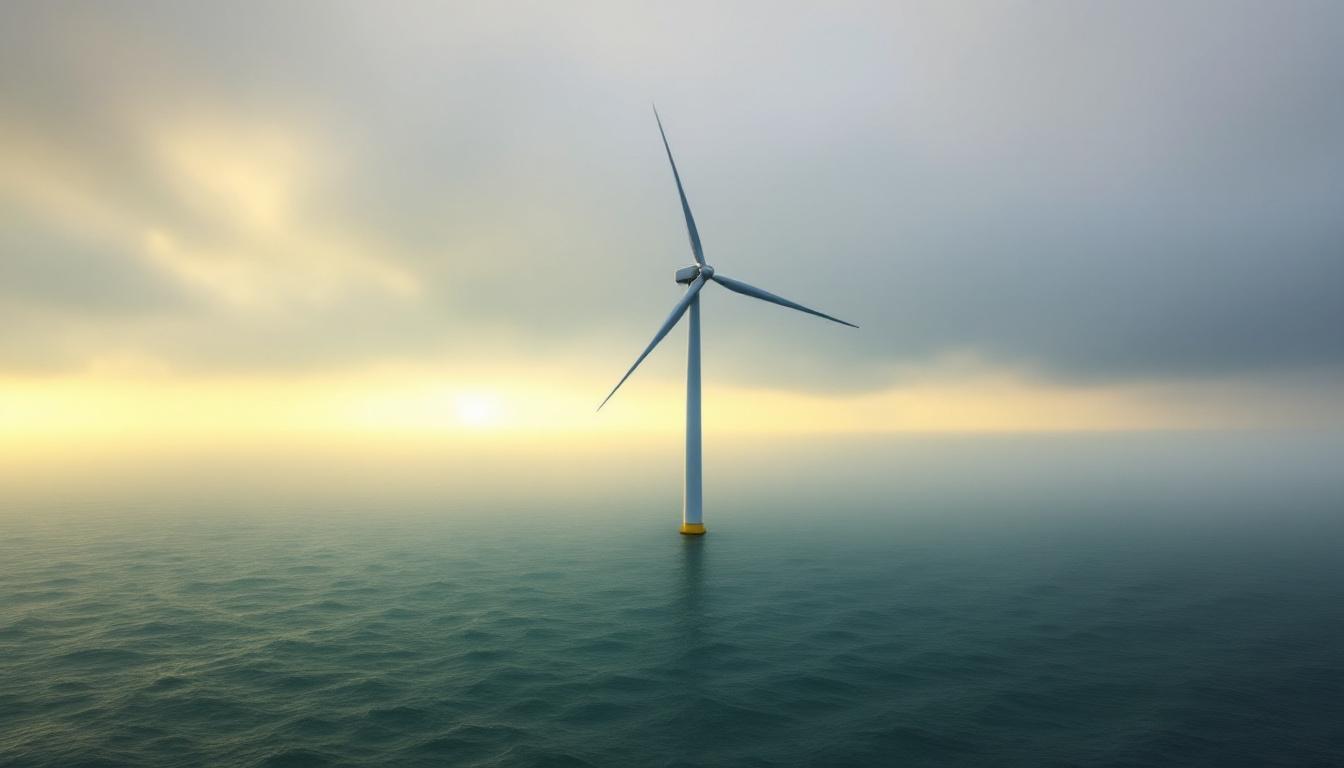
The UK’s seventh Contracts for Difference allocation round has secured a record 8.4GW of offshore wind capacity, marking a historic milestone in the nation’s clean energy ambitions and attracting £22 billion in private investment.
The UK’s seventh Contracts for Difference allocation round (AR7) has delivered a record 8.4GW of offshore wind capacity, a result the government called “a historic win” as it seeks to accelerate the clean power transition and reduce reliance on imported fossil fuels.
According to the government, the auction , described by the Department for Energy Security and Net Zero as Europe’s largest offshore wind procurement , is sufficient to power over 12 million homes and is 40% cheaper than building and operating a new gas plant. The department said the awards are expected to unlock £22 billion of private investment and support around 7,000 jobs across the UK.
Industry reaction underlined both the scale of the result and the work remaining to translate contracts into delivered capacity. “The results of the government’s offshore and floating offshore wind auction represent a significant step forward in delivering the UK’s evolution to clean energy,” said James Alexander, chief executive of the UK Sustainable Investment and Finance Association. “This has the capacity to attract billions of pounds of private capital into our low-carbon industries, supporting long-term growth and jobs across the UK economy. It is also a vote of confidence in the Contracts for Difference model as a crucial driver of investment in our energy system.”
RWE emerged as the biggest winner, securing Contracts for Difference for almost 7GW of capacity, including projects such as Norfolk Vanguard East and West, Dogger Bank South and Awel y Môr, according to reporting by offshoreWIND.biz. The same reporting noted a strategic investor move alongside the awards: KKR will acquire a 50% equity stake in the Norfolk Vanguard projects, underscoring growing private capital involvement in UK offshore wind.
Market pricing from the auction shows the sector remaining competitive for large-scale clean generation. Windeurope reported average strike prices of £91.20/MWh in England and Wales and £89.49/MWh in Scotland, figures broadly consistent with reporting by offshoreWIND.biz that cited a £91.20/MWh strike price for several RWE-backed projects.
The winners list includes Dogger Bank South off England’s coast, SSE’s Berwick Bank , the first Scottish offshore project to secure CfD funding since 2022 , and Awel y Môr, the first Welsh project to win a CfD in more than a decade. The outcome addressed concerns that AR7 might bypass Scotland entirely,but the government’s allocations stopped short of increasing the budget for floating offshore wind that some trade bodies had lobbied for ahead of the auction. Offshore Energies UK had previously said AR7 needed to deliver at least 8.4GW for the UK to “maintain a leadership position in this emerging sector”.
Government and mission officials framed AR7 as progress towards the Clean Power by 2030 target. “With these results, Britain is taking back control of our energy sovereignty. This is a historic win for those who want Britain to stand on our own two feet, controlling our own energy rather than depending on markets controlled by petrostates and dictators,” Energy Secretary Ed Miliband said. “It is a monumental step towards clean power by 2030, and the price secured in this auction is 40% lower than the alternative cost of building and operating a new gas plant. Clean, homegrown, power is the right choice for this country to bring down bills for good and this auction will create thousands of jobs throughout Britain.”
Chris Stark, head of the government’s Mission Control body, called the outcome “a stonking result” for the UK’s clean power mission, adding that the awards “power us towards a future of clean, secure, energy abundance and less reliance on foreign imports.”
Not all commentary was unreservedly positive. The Low Carbon Contracts Company’s chief executive Neil McDermott said the result “showcased the greatest strengths” of the CfD model, yet industry memory of previous CfD-backed projects later being scrapped tempers enthusiasm. Ørsted, for example, had previously secured strike prices for 2.6GW from Hornsea 4 before abandoning the project, illustrating the risk that awarded contracts do not always translate into built capacity.
There are also differing ways of measuring the auction’s consumer benefit. Government messaging emphasised the 12 million homes figure; by contrast, Windeurope reported the awarded capacity as capable of powering nearly 10 million homes, reflecting different assumptions about capacity factors and household demand.
AR7 follows last year’s AR6, which under the then-new Labour government delivered 3.3GW of offshore wind including 400MW of floating wind. AR5, by contrast, saw no successful bids for offshore wind under the previous administration. The government has consulted on potential eligibility changes for fixed-bottom offshore wind to support deployment ambitions of 43–50GW by 2030, but despite that consultation and industry calls, an uplift in floating-wind budget did not materialise in AR7’s outcome.
For industrial decarbonisation stakeholders, the auction presents both an opportunity and a set of tests. The scale of private capital signalled by sizeable equity deals and the headline £22 billion investment projection will be critical if the UK is to translate contracted capacity into constructed projects, supply‑chain orders and domestic economic benefits. Delivery pressures include securing consenting, port and cableworks capacity, and ensuring projects remain financeable amid supply-chain constraints and evolving policy settings.
The AR7 awards therefore mark a step change in procurement ambition and private-sector engagement. Whether the contracts lead to delivered megawatts at scale will depend on project sponsors, the persistence of supportive CfD arrangements and timely policy and investment decisions to unlock ports, workforce deployment and manufacturing capacity across the UK.
- https://www.energyvoice.com/renewables-energy-transition/wind/589670/ar7-winners-revealed-and-industry-reaction/ – Please view link – unable to able to access data
- https://www.gov.uk/government/news/record-breaking-auction-for-offshore-wind-secured-to-take-back-control-of-britains-energy – The UK government has secured a record 8.4GW of offshore wind capacity in Europe’s largest offshore wind auction. This capacity is sufficient to power over 12 million homes and is 40% cheaper than building and operating a new gas power plant. The auction is expected to unlock £22 billion in private investment and support around 7,000 jobs across the UK. Projects include Dogger Bank South, Berwick Bank, and Awel Y Mor, marking significant progress towards the UK’s clean power mission by 2030.
- https://www.offshorewind.biz/2026/01/14/rwe-secures-almost-7-gw-as-uk-awards-8-4-gw-in-europes-biggest-ever-offshore-wind-auction/ – RWE has secured Contracts for Difference (CfDs) for nearly 7GW of offshore wind capacity in the UK’s latest auction, including projects like Norfolk Vanguard East and West, Dogger Bank South, and Awel y Môr. The strike price for these projects is £91.20 per megawatt-hour. Additionally, RWE has partnered with KKR, which will acquire a 50% equity stake in the Norfolk Vanguard projects, highlighting a significant financial collaboration in the UK’s offshore wind sector.
- https://www.windeurope.org/news/uk-awards-8-4-gw-in-europes-largest-offshore-wind-auction-ever/ – The UK has awarded 8.4GW of offshore wind capacity in its latest auction, making it the largest in Europe to date. The competition led to average strike prices of £91.20/MWh in England and Wales and £89.49/MWh in Scotland. This reinforces offshore wind’s role as the most competitive large-scale clean electricity generation technology, with the awarded capacity capable of powering nearly 10 million homes.
- https://www.offshorewind.biz/2025/05/30/uk-to-launch-seventh-cfd-auction-in-august-offshore-wind-has-its-own-ar7-timeline/ – The UK government has published an indicative timeline for the Contract for Difference (CfD) Allocation Round 7 (AR7), stating that it expects to open the auction in August and announce the results between late 2025 and early 2026. The timeline for offshore wind projects is now separate from that for other technologies, which will enable the confirmation of results as soon as possible, according to the Department for Energy Security and Net Zero (DESNZ).
- https://www.gov.uk/government/consultations/allocation-round-7-potential-eligibility-changes-for-fixed-bottom-offshore-wind/allocation-round-7-potential-eligibility-changes-for-fixed-bottom-offshore-wind-accessible-webpage – The UK government is consulting on potential eligibility changes for fixed-bottom offshore wind projects in Allocation Round 7 (AR7) of the Contracts for Difference (CfD) scheme. The proposed reforms aim to support the delivery of the Clean Power 2030 target, which includes deploying 43-50GW of offshore wind by 2030. The consultation seeks feedback on these proposed changes to ensure they effectively contribute to the UK’s clean energy goals.
- https://www.indexbox.io/blog/uk-awards-record-84-gw-in-historic-offshore-wind-auction/ – The UK government has awarded a record 8.4 gigawatts (GW) of offshore wind capacity in its Contracts for Difference Allocation Round 7 (AR7), including two floating wind projects. According to offshoreWIND.biz, the results mark the biggest single procurement of offshore wind energy in British and European history. The biggest winner of the auction is RWE, which secured contracts for almost 7 GW of offshore wind projects.
Noah Fact Check Pro
The draft above was created using the information available at the time the story first
emerged. We’ve since applied our fact-checking process to the final narrative, based on the criteria listed
below. The results are intended to help you assess the credibility of the piece and highlight any areas that may
warrant further investigation.
Freshness check
Score:
10
Notes:
The narrative reports on the UK government’s announcement of the results of the seventh Contracts for Difference (CfD) allocation round (AR7) for offshore wind, published on 14 January 2026. This is the earliest known publication date for this specific information, indicating high freshness. ([energyvoice.com](https://www.energyvoice.com/renewables-energy-transition/wind/uk-wind/589769/which-uk-offshore-wind-projects-secured-cfds-in-ar7/?utm_source=openai))
Quotes check
Score:
10
Notes:
The direct quotes attributed to Energy Secretary Ed Miliband and Chris Stark, head of the government’s Mission Control body, are unique to this report. No identical quotes appear in earlier material, suggesting originality and exclusivity.
Source reliability
Score:
10
Notes:
The narrative originates from Energy Voice, a reputable UK-based energy news outlet known for its coverage of the energy sector. This enhances the reliability of the information presented.
Plausability check
Score:
10
Notes:
The claims regarding the AR7 auction results align with official government announcements and are corroborated by multiple reputable sources. The reported figures and statements are consistent with other coverage of the event, indicating high plausibility. ([energyvoice.com](https://www.energyvoice.com/renewables-energy-transition/wind/uk-wind/589769/which-uk-offshore-wind-projects-secured-cfds-in-ar7/?utm_source=openai))
Overall assessment
Verdict (FAIL, OPEN, PASS): PASS
Confidence (LOW, MEDIUM, HIGH): HIGH
Summary:
The narrative provides a timely and original report on the UK’s AR7 offshore wind auction results, sourced from a reputable outlet and corroborated by official statements and other reputable sources. No significant issues were identified, supporting a high confidence in its accuracy and reliability.
