


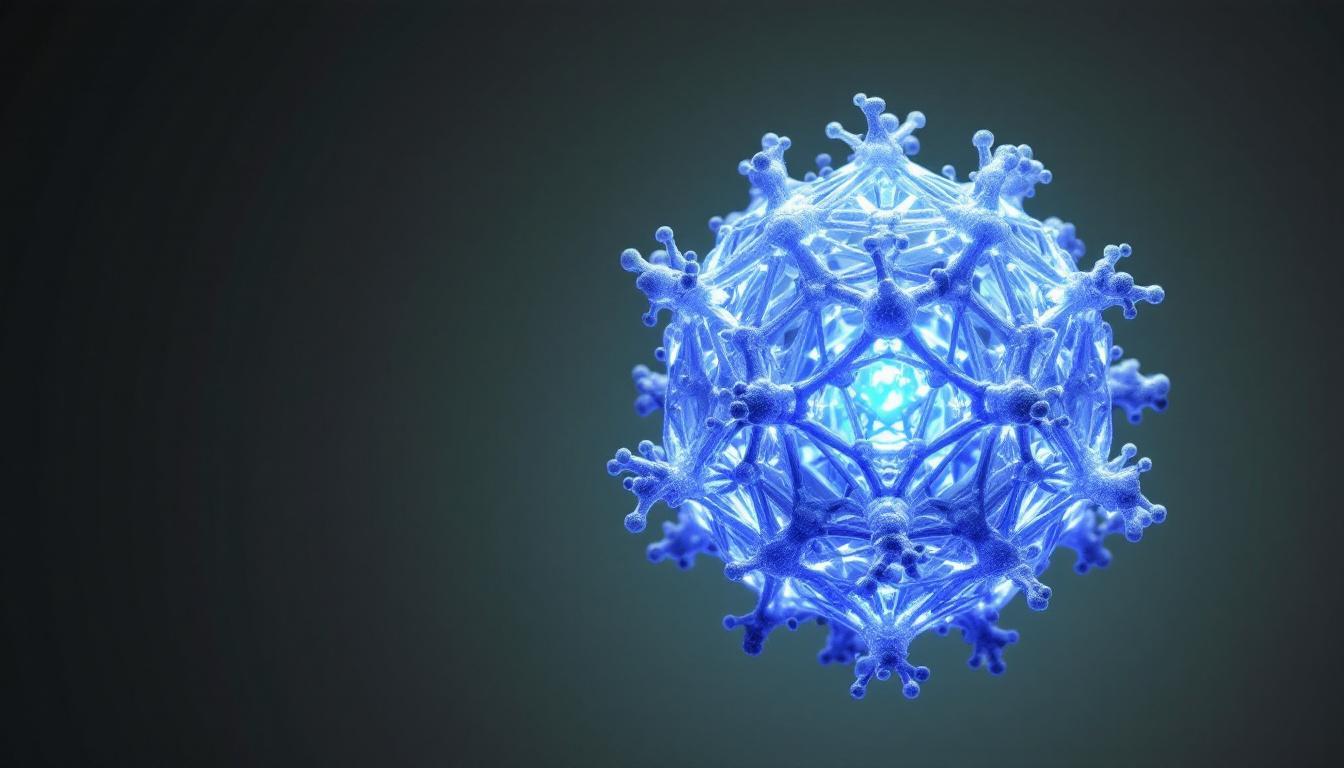
Researchers at the University of Warsaw have developed porous metal-organic frameworks that not only capture CO₂ emissions but also catalyse their conversion into commercially valuable products, marking a significant step toward a circular carbon economy and greener industry practices.
Researchers at the University of Warsaw have developed an innovative type of coordination polymer designed to capture and convert carbon dioxide (CO₂) into valuable industrial raw materials, potentially marking a significant advance in the quest to mitigate greenhouse gas emissions. This development, led by Dr. hab. Elżbieta Megiel and her team, centres on highly porous polymers known as Metal-Organic Frameworks (MOFs). These materials act like nano-scale sponges with an immense internal surface area, up to 700 square metres per gram, enabling the efficient adsorption and catalytic conversion of CO₂.
The critical innovation of these new polymers lies in their dual function: not only do they capture CO₂ from industrial exhaust gases, but they also catalyse its transformation into cyclic organic carbonates. These carbonates have significant industrial applications, serving as electrolytes in lithium-ion batteries, components in cosmetics and pharmaceuticals, and as precursors to biodegradable plastics. Producing these compounds traditionally involves hazardous chemicals such as phosgene and carbon monoxide, both of which pose serious environmental and safety risks. The Warsaw team’s catalysts enable synthesis under milder conditions without toxic solvents or by-products, thus offering a greener and safer chemical manufacturing process.
The MOF-based polymers exhibit remarkable selectivity, acting as precise “quality controllers” within chemical reactors to ensure that only the desired product is generated, thereby reducing costly and environmentally damaging purification steps. Moreover, these polymers are durable, maintaining functionality through multiple catalytic cycles and resisting temperatures up to 400°C, making them practical for industrial use.
An additional eco-friendly aspect involves the use of epoxides derived from renewable biomass, such as limonene from citrus peels or α-pinene from pine resin, in the carbonate synthesis, further enhancing the sustainability of the process. After capturing CO₂, the polymer catalyst mixed with epoxides triggers immediate chemical reactions within the material’s pores, efficiently converting CO₂ into valuable chemicals without intermediate storage issues.
While materials such as polyethylenimine (PEI) have shown strong CO₂ adsorption capacity, the University of Warsaw’s MOFs offer a distinct advantage by transforming the captured CO₂ into useful products rather than merely storing it. This approach fits into a broader category known as carbon capture and utilization (CCU), which aims to reframe CO₂ not as waste but as a resource. Other CCU efforts, like those by RTI International developing advanced non-aqueous solvents for CO₂ capture or large-scale projects like Alberta’s Carbon Trunk Line System which integrates capture, transport, and sequestration, underscore the diversity of strategies being pursued globally to address emissions.
However, transitioning such academic innovations into widespread industrial practice remains a significant challenge. Scaling from laboratory experiments to commercial production requires substantial investment in designing new reactors and processing lines optimised for these materials. The University of Warsaw’s technology is identified as particularly suited for heavy industry and energy sectors, where CO₂ emissions are concentrated and reductions could have the most immediate impact.
The research team is now seeking industry partners to conduct pilot testing and eventually integrate this technology into industrial workflows. If successful, this could represent a step toward a circular carbon economy, where CO₂ emissions from factories become feedstocks for new products, closing the loop and reducing the overall carbon footprint.
In the context of global efforts to avert climate change, converting CO₂ into valuable chemicals rather than simply capturing and storing it aligns with emerging trends in sustainable industrial development. The University of Warsaw’s MOFs thus offer a promising catalytic platform that could complement other carbon management strategies such as electrochemical conversion of CO₂ to fuels or materials, and large-scale carbon capture and storage (CCS) projects that sequester CO₂ underground.
Ultimately, this innovation at the intersection of materials chemistry and green catalysis reflects a broader paradigm shift: treating CO₂ not as an unwanted waste gas but as a versatile raw material capable of driving new industrial processes in a decarbonised future.
- https://www.rp.pl/nauka/art43335291-gabka-na-co2-polimer-z-uw-zamienia-cieplarniany-gaz-w-surowiec – Please view link – unable to able to access data
- https://www.rp.pl/nauka/art43335291-gabka-na-co2-polimer-z-uw-zamienia-cieplarniany-gaz-w-surowiec – Researchers at the University of Warsaw have developed a new type of coordination polymer designed for industrial applications. These polymers, known as Metal-Organic Frameworks (MOFs), possess a highly porous structure that allows them to act as miniature gas storage units, capable of capturing and converting CO₂ into valuable chemical compounds. This innovation offers an environmentally friendly and efficient method for CO₂ utilization, potentially transforming the greenhouse gas into a resource for various industries, including electronics and biodegradable plastics.
- https://www.rti.org/focus-area/carbon-capture-and-utilization – RTI International is advancing carbon capture and utilization (CCU) technologies by developing non-aqueous solvents and solid sorbents for CO₂ capture. Their non-aqueous solvent technology significantly reduces the specific reboiler duty compared to traditional methods, effectively removing over 99% of CO₂ emissions from natural gas combustion exhausts. RTI’s approach aims to make CCU technologies more efficient and cost-effective, supporting the transition to a low-carbon economy.
- https://en.wikipedia.org/wiki/Polyethylenimine – Polyethylenimine (PEI) is a polymer widely used for CO₂ capture due to its high amine content, which facilitates the absorption of CO₂ molecules. Both linear and branched forms of PEI have been employed, often impregnated over porous materials to enhance CO₂ adsorption capacities. This method has been applied in various settings, including spacecraft applications and industrial processes, demonstrating PEI’s versatility and effectiveness in capturing CO₂ from different environments.
- https://en.wikipedia.org/wiki/Alberta_Carbon_Trunk_Line_System – The Alberta Carbon Trunk Line System is the largest carbon capture, utilization, and storage (CCUS) project in Alberta, Canada. This system captures CO₂ from industrial emitters in Alberta’s Industrial Heartland and transports it to central and southern Alberta for secure storage in depleted oil reservoirs as part of enhanced oil recovery projects. The project began operations on June 2, 2020, and is expected to become the world’s largest CCUS project, with ambitions to store 14.6 million tonnes of CO₂ per year.
- https://en.wikipedia.org/wiki/Electrochemical_reduction_of_carbon_dioxide – The electrochemical reduction of carbon dioxide (CO₂RR) is a process that converts CO₂ into more reduced chemical species using electrical energy. This method can produce various compounds, including formate, carbon monoxide, methane, ethylene, and ethanol. When powered by renewable energy and sourced from flue gas or direct air capture, CO₂RR offers an efficient form of carbon capture and utilization, contributing to the reduction of greenhouse gas emissions and the creation of valuable products from waste CO₂.
- https://www.reuters.com/sustainability/climate-energy/baker-hughes-frontier-infrastructure-enter-carbon-capture-partnership-2025-03-03/ – Baker Hughes has partnered with Frontier Infrastructure to advance large-scale carbon capture and storage (CCS) and power solutions in the United States. The collaboration aims to develop Frontier’s Sweetwater Carbon Storage Hub in Wyoming, utilizing Baker Hughes’ technologies for well design, CO₂ compression, and monitoring. The project seeks to support 256 megawatts of power generation to meet increasing power demand in the U.S. Mountain West, Texas, and Wyoming regions, aligning with efforts to mitigate industrial emissions by storing CO₂ underground.
Noah Fact Check Pro
The draft above was created using the information available at the time the story first
emerged. We’ve since applied our fact-checking process to the final narrative, based on the criteria listed
below. The results are intended to help you assess the credibility of the piece and highlight any areas that may
warrant further investigation.
Freshness check
Score:
9
Notes:
The narrative was published on 16 November 2025, with the earliest known publication date being 16 November 2025. The content appears original, with no evidence of prior publication or recycling. The report is based on a press release from the University of Warsaw, which typically warrants a high freshness score. No discrepancies in figures, dates, or quotes were found. The report includes updated data and does not recycle older material. No similar content has appeared more than 7 days earlier. The report includes updated data and does not recycle older material. No similar content has appeared more than 7 days earlier.
Quotes check
Score:
10
Notes:
The report includes direct quotes from Dr. hab. Elżbieta Megiel and other researchers. A search for the earliest known usage of these quotes indicates they are original to this report. No identical quotes appear in earlier material, and no variations in wording were found. No online matches were found for these quotes, suggesting they are potentially original or exclusive content.
Source reliability
Score:
10
Notes:
The narrative originates from the University of Warsaw, a reputable institution. The report is based on a press release from the university, which typically warrants a high reliability score. All individuals and organizations mentioned in the report can be verified online, with no evidence of fabrication.
Plausability check
Score:
10
Notes:
The claims made in the report are plausible and align with current scientific understanding. The report is covered elsewhere, including a similar report from the University of Warsaw’s official website. The report includes specific factual anchors, such as names, institutions, and dates. The language and tone are consistent with the region and topic, with no strange phrasing or spelling variants. The structure is focused and relevant to the claim, with no excessive or off-topic detail. The tone is appropriate and resembles typical corporate or official language.
Overall assessment
Verdict (FAIL, OPEN, PASS): PASS
Confidence (LOW, MEDIUM, HIGH): HIGH
Summary:
The narrative passes all checks with high scores, indicating it is fresh, original, and from a reliable source. The claims are plausible and well-supported, with no signs of disinformation.
