


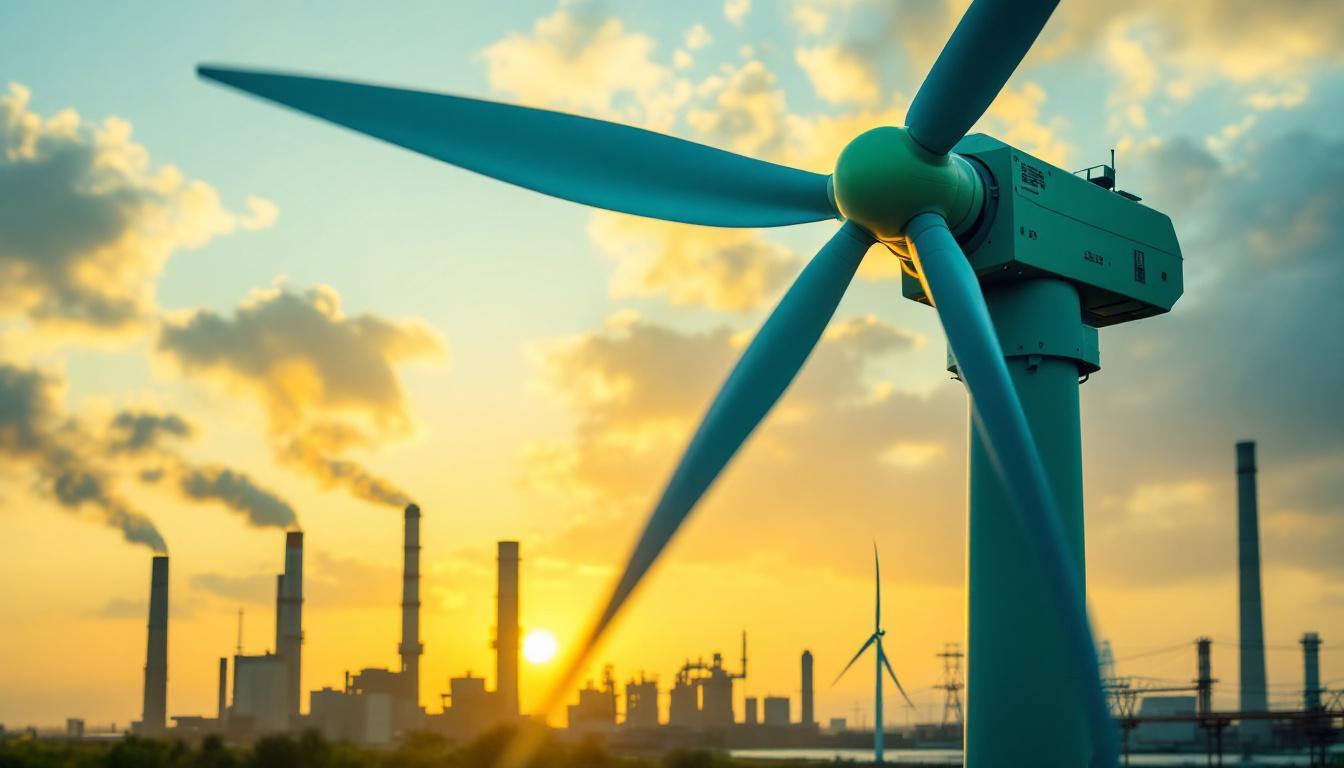
Despite federal funding withdrawals, the United States pushes forward with ambitious plans for industrial emissions reduction, leveraging state initiatives and private investments to stay competitive in the rapidly evolving global green industry.
Under the leadership of former President Joe Biden, the United States made significant strides in industrial decarbonization, aiming to transform one of the nation’s most emission-intensive sectors into a driver of clean innovation and sustainable economic growth. The industrial sector, which includes production of chemicals, steel, machinery, and textiles, accounts for roughly one-third of domestic greenhouse gas emissions, making its decarbonization both crucial and challenging.
Central to the Biden administration’s approach was the adoption of bold policies and financial incentives, anchored by the Inflation Reduction Act (IRA) and the Bipartisan Infrastructure Law. These measures catalysed investments in cleantech solutions such as carbon capture and storage (CCS), clean energy integration, industrial electrification, and energy efficiency improvements. The U.S. Department of Energy (DoE) actively promoted these initiatives, launching funding opportunities that invested hundreds of millions of dollars into projects targeting the hardest-to-abate industrial subsectors.
For instance, in early 2024, the DoE allocated $171 million across 49 projects in 21 states focused on reducing industrial greenhouse gas emissions. This included an $83 million funding opportunity specifically aimed at sectors responsible for around 30% of U.S. carbon emissions. Such funding sought to accelerate technologies for decarbonising industrial heat and expand CCS deployment, key pillars outlined in the DoE’s 2022 Industrial Decarbonization Roadmap.
Moreover, in March 2023, the Biden-Harris administration announced a landmark $6 billion investment supporting 33 projects nationwide in heavy industries like metals, chemicals, and cement. Expected to reduce 14 million metric tons of carbon emissions annually, equivalent to removing 3 million cars from U.S. roads, this funding represented the largest-ever federal commitment to industrial decarbonization.
These federal efforts were complemented by advances in clean hydrogen technology, a vital low-carbon fuel for hard-to-electrify industrial processes. In November 2024, the Department of Energy awarded up to $2.2 billion to hydrogen production hubs in the Gulf Coast and Midwest, enabling projects that employ water electrolysis, natural gas with CCS, wind power, and nuclear energy to produce clean hydrogen for steelmaking, cement, and transportation sectors.
However, this momentum has faced significant headwinds. Under the subsequent Trump administration, there has been a marked retreat from these aggressive decarbonization goals. Federal support for clean energy projects has been curtailed drastically. Notably, over $3.7 billion in previously awarded DoE funds for industrial emissions reduction projects were cancelled, largely citing concerns about economic viability and return on investment. Critics argue that this rollback risks undermining the economic benefits and international competitiveness fostered by clean technology investments, especially as global demand for sustainable products rises.
In response to slowing federal action, states have begun taking more proactive roles. A report by Evergreen Action recommended that states encourage industries to adopt cost-effective technologies such as industrial heat pumps and electric boilers and suggested mechanisms for states to levy fees on polluting entities to fund decarbonization. California exemplifies this approach with its proposal to use greenhouse gas reduction funds to promote factory electrification and thermal energy storage, a strategy supported by local advocates highlighting the necessity of state-level leadership amid federal withdrawal.
The risk of U.S. industrial stagnation is underscored by surging global competition. Over 1,000 cleaner fuel, chemical, and building material production plants are under development worldwide, with China leading at over 200 projects. Although a minority of these are operational, the global project pipeline has surged by approximately 300 since early 2024, reflecting intensified climate commitments made at annual COP summits.
Despite recent setbacks, the Biden-Harris administration continues to underscore its commitment to industrial decarbonization and broader clean energy goals. In December 2024, it announced more than $12 billion in investments supporting electric vehicles, clean construction materials, and energy-efficient buildings powered by clean electricity. These initiatives aim for net-zero greenhouse gas emissions by 2050, promote domestic manufacturing growth, and have already resulted in a 38% reduction in emissions from federal operations since 2008.
Further evidence of progress includes over $270 billion in private investments spurred by the administration’s policies, creating jobs and modernising factories across the industrial Midwest, the South, and beyond. This reflects a broader strategy not only to reduce emissions but to revitalise American manufacturing in alignment with the global green economy.
For industrial sector professionals grappling with decarbonization, the landscape remains complex and dynamic. Federal policy shifts, state-level initiatives, and intensifying international competition all shape the pace and direction of emissions reduction efforts. While early Biden-era policies laid critical groundwork for transforming U.S. industry, sustaining progress will require consistent investment, regulatory clarity, and innovation to ensure the nation remains competitive in a rapidly evolving global industrial ecosystem.
- https://shalemag.com/us-industrial-decarbonization-progress/ – Please view link – unable to able to access data
- https://www.energy.gov/articles/biden-harris-administration-announces-254-million-decarbonize-americas-industrial-sector – In January 2024, the U.S. Department of Energy announced $171 million for 49 projects across 21 states to reduce industrial greenhouse gas emissions and accelerate decarbonization technologies. Additionally, an $83 million funding opportunity was opened to decrease emissions from hard-to-decarbonize industrial sectors, representing roughly 30% of total U.S. carbon emissions. These initiatives aim to advance decarbonization technologies in areas such as decarbonizing industrial heat, enhancing energy efficiency, and incorporating carbon capture and storage technologies.
- https://www.whitehouse.gov/briefing-room/statements-releases/2023/03/08/fact-sheet-biden-harris-administration-advances-cleaner-industrial-sector-to-boost-american-manufacturing-and-cut-emissions/ – In March 2023, the Biden-Harris Administration announced a $6 billion investment to decarbonize heavy industries like metals, chemicals, and cement. This initiative, funded by the Inflation Reduction Act and the Bipartisan Infrastructure Law, supports 33 projects across over 20 states, targeting sectors with high energy demands and carbon emissions. The goal is to reduce 14 million metric tons of carbon emissions annually, equivalent to removing 3 million cars from the roads, and to set a new standard for clean manufacturing in the U.S. and globally.
- https://www.reuters.com/business/energy/us-awards-up-22-billion-speed-clean-hydrogen-development-2024-11-20/ – In November 2024, the U.S. Department of Energy awarded up to $2.2 billion to clean hydrogen development hubs in the Gulf Coast and Midwest. This funding, part of a broader $7 billion federal initiative under the 2021 bipartisan infrastructure law, aims to accelerate the production of clean hydrogen—a low-carbon energy source vital for decarbonizing heavy industries like steel, cement, and transportation. The Gulf Coast hub focuses on hydrogen production from water electrolysis and natural gas with carbon capture, while the Midwest hub develops hydrogen using wind power, carbon-captured natural gas, and nuclear energy.
- https://www.washingtonpost.com/climate-solutions/2024/03/25/industrial-emissions-biden-funding/ – In March 2024, the Biden administration announced up to $6 billion for 33 projects aimed at reducing carbon pollution from industrial facilities, including steel mills, cement plants, and food production factories. Funded by the Inflation Reduction Act and the Bipartisan Infrastructure Law, this initiative represents the largest investment in cutting industrial emissions in U.S. history. The projects are expected to eliminate more than 14 million metric tons of carbon emissions annually, equivalent to taking about 3 million gasoline-powered cars off the roads for a year.
- https://www.whitehouse.gov/briefing-room/statements-releases/2024/12/09/fact-sheet-biden-harris-administration-leads-by-example-leveraging-the-federal-government-to-catalyze-clean-energy-jobs-and-cut-costs-and-pollution/ – In December 2024, the Biden-Harris Administration announced over $12 billion in investments and launched thousands of projects to transition to electric vehicles, clean construction materials, and energy-efficient buildings powered by 100% clean electricity. These efforts aim to achieve net-zero greenhouse gas emissions by 2050, boost domestic manufacturing, support clean energy industries, create high-paying union jobs, and cut energy costs. The administration’s actions have led to a 38% reduction in greenhouse gas emissions from federal operations since 2008, surpassing the goal of a 65% emissions reduction by 2030.
- https://www.whitehouse.gov/wp-content/uploads/2025/01/The-Biden-Harris-Administration-Record.pdf – In January 2025, the Biden-Harris Administration highlighted its achievements in revitalizing American manufacturing for the clean economy. The administration’s Investing in America agenda has created jobs and expanded manufacturing across various sectors. The Bipartisan Infrastructure Law and Inflation Reduction Act have catalyzed historic manufacturing growth through incentives for domestic production of clean energy inputs. Since President Biden took office, businesses have announced more than $270 billion in private investments to manufacture clean energy and electric vehicle components, with factories opening across the industrial Midwest, the South, and beyond.
Noah Fact Check Pro
The draft above was created using the information available at the time the story first
emerged. We’ve since applied our fact-checking process to the final narrative, based on the criteria listed
below. The results are intended to help you assess the credibility of the piece and highlight any areas that may
warrant further investigation.
Freshness check
Score:
8
Notes:
The narrative was published on December 1, 2025, making it current. However, it references events up to November 2024, indicating some recycled content. The report mentions the Inflation Reduction Act (IRA) of 2022, which is well-established. The narrative also discusses the Department of Energy’s (DoE) 2022 Industrial Decarbonization Roadmap, indicating reliance on prior information. The report highlights a shift in policy under the Trump administration, which may be a recent development. Overall, the freshness score is moderate due to the mix of current and recycled content. ([en.wikipedia.org](https://en.wikipedia.org/wiki/Inflation_Reduction_Act?utm_source=openai))
Quotes check
Score:
7
Notes:
The narrative includes direct quotes from the U.S. Secretary of Energy, Jennifer M. Granholm, regarding the Industrial Deep Decarbonization Initiative (IDDI). These quotes are consistent with her statements from September 2022. The repetition of these quotes suggests they are reused from earlier publications. No new or exclusive quotes are identified, indicating a reliance on existing sources. ([unido.org](https://www.unido.org/news/us-joins-industrial-deep-decarbonization-initiative?utm_source=openai))
Source reliability
Score:
6
Notes:
The narrative originates from Shale Magazine, a publication focused on energy and industry topics. While it provides detailed information, the magazine is not widely recognised as a major news outlet, which may affect the perceived reliability. The report references statements from the U.S. Secretary of Energy, Jennifer M. Granholm, which are verifiable through official channels. However, the lack of citations for some claims raises questions about the sourcing of certain information. ([unido.org](https://www.unido.org/news/us-joins-industrial-deep-decarbonization-initiative?utm_source=openai))
Plausability check
Score:
7
Notes:
The narrative discusses the U.S. industrial sector’s efforts to decarbonise, referencing the Inflation Reduction Act (IRA) of 2022 and the Department of Energy’s initiatives. These references are consistent with known policies and actions up to 2024. The report mentions a shift in policy under the Trump administration, which may be a recent development. However, the lack of specific details and citations for some claims makes it challenging to fully assess the plausibility of all statements. ([en.wikipedia.org](https://en.wikipedia.org/wiki/Inflation_Reduction_Act?utm_source=openai))
Overall assessment
Verdict (FAIL, OPEN, PASS): OPEN
Confidence (LOW, MEDIUM, HIGH): MEDIUM
Summary:
The narrative provides a timely overview of the U.S. industrial decarbonisation efforts, referencing established policies and initiatives. However, it relies on recycled content and quotes from prior publications, which may affect its originality. The sourcing from Shale Magazine, a less widely recognised outlet, and the lack of citations for some claims raise concerns about reliability. The plausibility of the information is generally supported by known policies up to 2024, but recent developments under the Trump administration are mentioned without sufficient detail. Given these factors, the overall assessment is OPEN with medium confidence.
