


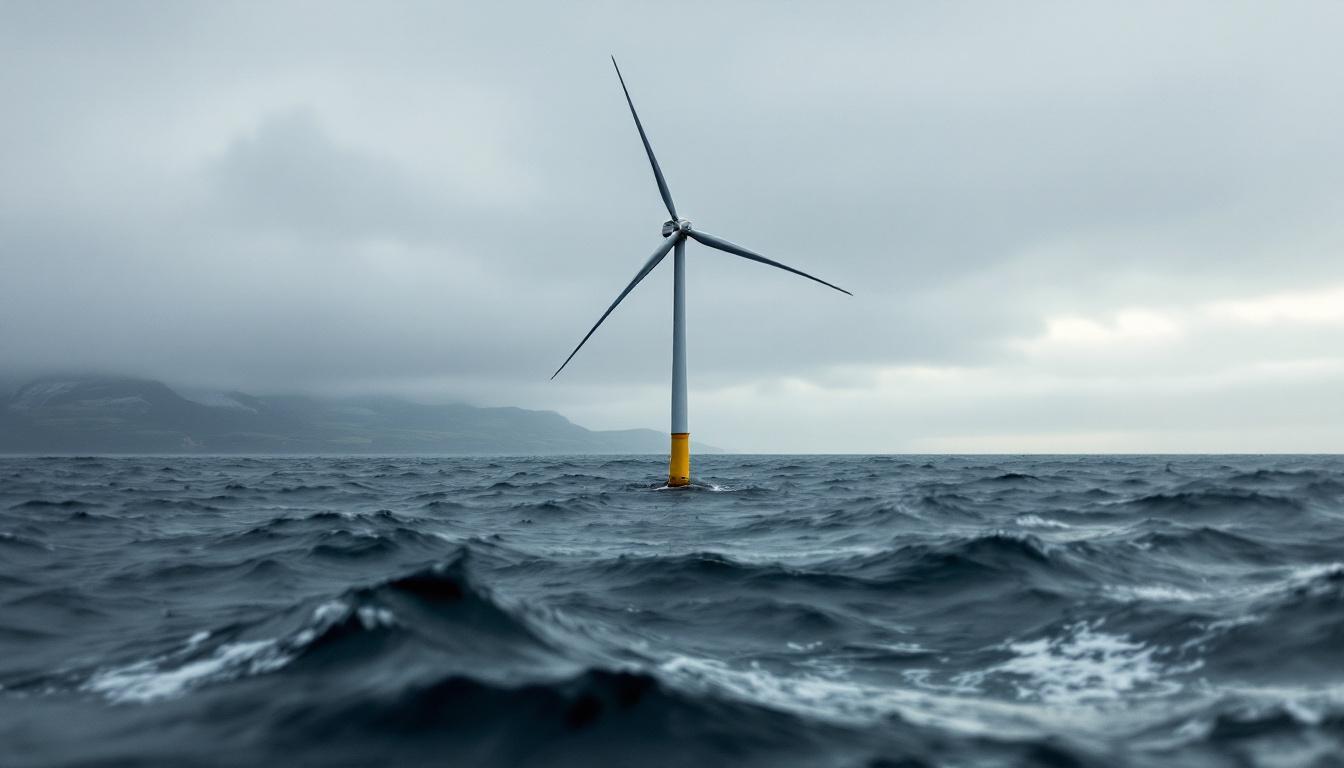
The US administration’s sudden suspension of five major offshore wind projects on the East Coast has sparked legal battles, political opposition, and industry uncertainty, threatening the US’s renewable energy targets.
President Trump’s administration has sharply escalated a confrontation with the nascent US offshore wind industry, ordering a temporary halt to construction on five large East Coast projects and triggering lawsuits, political backlash and fresh uncertainty for supply chains and financiers.
The Interior Department’s Bureau of Ocean Energy Management (BOEM) in late December issued a stop‑work directive and a 90‑day review, citing classified national security assessments from the Department of Defense that, the administration says, raise concerns about turbine locations and evolving adversary technologies. The pause, announced on December 22 and repeated in subsequent agency notices, affects Dominion Energy’s Coastal Virginia Offshore Wind (CVOW), Vineyard Wind (Massachusetts), Revolution Wind (Rhode Island and Connecticut), and Sunrise and Empire Wind (New York). The administration says the measures are necessary to protect defence capabilities; critics say the national security rationale is unconvincing and politically motivated.
Dominion has been the most visible challenger. The Richmond‑based company filed suit in the US District Court for the Eastern District of Virginia seeking to vacate BOEM’s order and to block enforcement of the suspension. In its complaint Dominion said BOEM’s action “sets forth no rational basis, cannot be reconciled with BOEM’s own regulations and prior issued lease terms and approvals, is arbitrary and capricious, is procedurally deficient, violates the Outer Continental Shelf Lands Act, and infringes upon constitutional principles that limit actions by the Executive Branch”. Dominion told courts and the press its 2.6 GW CVOW project had already entered turbine installation and that the company had spent roughly $8.9 billion of an expected $11.2 billion total cost. Dominion and media reporting have estimated immediate losses of more than $5 million a day for ships and construction mobilisation while work is suspended.
Industry responses have been swift and varied. Global developer Ørsted has been reported to be weighing legal action and said the pause imperils projects that had already received multiple rounds of federal and state approvals. OffshoreWind.biz and other trade outlets note that the five projects now paused represent about 5.8 GW of capacity and are at different stages of construction and commissioning; Revolution Wind had been due to begin generating within weeks, according to developer statements.
State political leaders have taken an unusually united stance against the federal move. Governors of Connecticut, Massachusetts, Rhode Island and New York , Ned Lamont, Maura Healey, Daniel McKee and Kathy Hochul , jointly demanded a classified briefing from the Pentagon and criticised the administration’s actions as “irrational and erratic” in a letter dated December 24. Democratic senators and state officials warned that the suspension threatens jobs, pushes up energy costs and risks grid reliability as demand rises.
Legal and regulatory context has complicated the confrontation. A federal judge in a separate case struck down an earlier executive order, issued on President Trump’s first day back in office in January 2025, that sought to block wind projects on federal lands and waters. U.S. District Judge Patti Saris found that order “arbitrary and capricious” and in violation of the Administrative Procedure Act, a decision welcomed by state officials and renewable energy advocates who argued that offshore wind is critical to decarbonisation and energy security. The Interior’s December pause follows that ruling and has itself been quickly met with litigation and urgent court hearings; Dominion’s hearing on emergency relief proceeded before U.S. District Judge Jamar Walker at the end of December.
National security arguments underpinning the pause centre on radar interference and “clutter” from turbine arrays and worries about foreign influence in supply chains. The administration points to classified Pentagon assessments indicating new risks; BOEM’s acting director has said the review is intended to determine whether sites, equipment or ownership structures pose threats to defence operations. Critics, including some national security experts who have spoken to the press, counter that projects already underwent Defence Department consultations during permitting and that the new claims overstate or repurpose long‑standing technical concerns. The acting BOEM director, Matthew Giacona, has drawn scrutiny because of his former work in industry lobbying, prompting calls for an ethics review from some quarters.
Financial markets and credit analysts have taken notice. Reporting indicates Ørsted faced a credit downgrade risk in worst‑case scenarios, and developers are assessing whether asset sales, contract re‑negotiations or insurance claims will be necessary to preserve liquidity through protracted reviews or litigation. Industry trade groups and developers warn of knock‑on effects across fabrication yards, port upgrades and the domestic supply chain that policymakers have been seeking to grow as part of industrial decarbonisation strategies.
The stoppage also raises specific operational and contractual questions for grid operators and utilities that had planned to rely on the projects for near‑term capacity and renewable energy credits. Industry data shows offshore wind contracts and interconnection schedules had been folded into resource planning and clean‑energy mandates in multiple Atlantic states; a suspension risks shifting reliability and emission reduction plans back onto fossil generation or expensive short‑term purchases.
The episode emerges against a broader political backdrop in which the administration has repeatedly criticised renewable energy policies. Supporters of the pause argue that national security must take precedence when new threats are identified, while opponents see the action as a continuation of efforts to curtail federal support for wind. Legal battles over the pause are likely to determine near‑term outcomes: developers are seeking injunctive relief to resume construction, and courts will be asked to weigh BOEM’s statutory authority, the evidentiary basis for national security claims and the limits of executive action.
For an industry that has invested billions of dollars and years of supply‑chain build‑out into East Coast projects, the immediate priorities are financial resilience, legal redress and reassurance to state regulators and customers. Developers and state officials alike have indicated they will press for transparency in any classified assessments and for prompt, evidence‑based resolutions to avoid cascading economic losses and to keep the United States on track to meet decarbonisation targets that rely on large‑scale offshore resources. The coming weeks of litigation, agency review and federal‑state engagement will determine whether the pause is a temporary interruption or a long‑term setback for the US offshore wind sector.
Source: Noah Wire Services
- https://www.saurenergy.com/wind/trumps-offshore-wind-assault-shocks-industry-10957410 – Please view link – unable to able to access data
- https://apnews.com/article/f5e4078b55cb1449a80de390153b3ae2 – Dominion Energy Virginia has filed a lawsuit against the Trump administration, challenging an executive order that halted construction of the Coastal Virginia Offshore Wind project, along with four other offshore wind projects across several states. The administration cited unspecified national security concerns, prompting the Department of the Interior’s Bureau of Ocean Energy Management to initiate a 90-day review period. Dominion claims the order is ‘arbitrary and capricious’ and violates the Constitution. The delay could cost the company over $5 million daily due to paused ship operations, which may eventually burden consumers. The project, under construction since early 2024, aims to supply power to approximately 660,000 homes by next year. Other affected projects include Vineyard Wind in Massachusetts, Revolution Wind in Rhode Island and Connecticut, and Sunrise and Empire Wind in New York. Democratic governors in those states have pledged to oppose the order, which they see as part of broader federal efforts to undermine renewable energy. A hearing on Dominion’s request to block the order is scheduled for Monday before U.S. District Judge Jamar Walker.
- https://apnews.com/article/337980893e944ca274e46dbb70d04cb1 – On December 23, 2025, the Trump administration ordered a 90-day suspension of five major offshore wind projects along the East Coast, citing national security concerns. The Interior Department’s Bureau of Ocean Energy Management (BOEM) informed developers that the projects could pose immediate threats due to their sensitive locations and evolving adversary technologies, based on a recent classified Defense Department assessment. The suspension could be extended if necessary. Critics, including national security experts and Democratic lawmakers, questioned the validity of the threats, noting no significant changes in the risk landscape. The move follows a federal judge’s recent rejection of a Trump executive order blocking wind projects and has triggered backlash from state leaders. Governors of Connecticut, Rhode Island, Massachusetts, and New York condemned the decision, warning of economic harm and threats to grid reliability. Two Democratic senators also expressed concern that this action could derail bipartisan permitting reform for energy infrastructure. Controversy surrounds BOEM’s acting director, Matthew Giacona, a former industry lobbyist, prompting calls for an ethics investigation. The administration’s latest action is widely viewed as part of its broader opposition to renewable energy.
- https://apnews.com/article/a8c2f1201ac6b0607e8c4a1c36e651ba – A federal judge has struck down former President Donald Trump’s executive order that aimed to block wind energy projects on federal lands and waters. The order, issued on Trump’s first day back in office in January 2025, was challenged by a coalition of 17 state attorneys general and Washington, D.C., led by New York Attorney General Letitia James. U.S. District Judge Patti Saris ruled the order was ‘arbitrary and capricious,’ in violation of U.S. law, particularly the Administrative Procedure Act. The judge’s ruling is seen as a significant victory for renewable energy advocates and states that have heavily invested in offshore wind, such as Massachusetts. Trump’s executive order had paused lease and permit approvals under the claim of legal deficiencies, but critics argued it jeopardized clean energy development, economic investments, and climate goals. Supporters of clean energy—state officials, industry leaders, and environmental groups—welcomed the ruling as a move toward securing green jobs, reducing energy costs, and improving grid reliability. The Biden administration’s wind policies were previously criticized by Trump’s camp for offering preferential treatment. Wind energy currently provides approximately 10% of U.S. electricity.
- https://www.washingtonpost.com/business/2025/12/26/dominion-virginia-offshore-wind-trump-energy-interior/f886816e-e275-11f0-9a80-62add4d0e8ef_story.html?itid=agg_ticker – The developers of a Virginia offshore wind project are asking a federal judge to block a Trump administration order that halted construction of their project, along with four others, over national security concerns. Dominion Energy Virginia said in its lawsuit filed late Tuesday that the government’s order is ‘arbitrary and capricious’ and unconstitutional. The Richmond-based company is developing Coastal Virginia Offshore … . The Interior Department did not detail the … — and possibly longer — ‘to determine whether the national security … .’ The other projects are the Vineyard Wind project under construction in Massachusetts, Revolution Wind in Rhode Island and Connecticut and two projects in New York: Sunrise Wind and Empire Wind. Democratic governors in those states have vowed to fight the order, the latest action by the Trump administration to hobble offshore wind in its push against renewable energy sources. Dominion’s project has been under construction since early 2024 and was scheduled to come online early next year, providing enough energy to power about 660,000 homes. The company said the delay was costing it more than $5 million a day in losses solely for the ships used in round-the-clock construction, and that customers or the company would eventually bear the cost.
- https://apnews.com/article/c0ac1e447c93126327f1922327921aa0 – On December 22, 2025, the Trump administration suspended leases for five major offshore wind projects on the East Coast, citing national security concerns highlighted by the Pentagon. The projects affected include Vineyard Wind (Massachusetts), Revolution Wind (Rhode Island and Connecticut), Coastal Virginia Offshore Wind, and New York’s Sunrise and Empire Wind. The Department of Interior claimed that wind turbines cause radar interference, producing ‘clutter’ that may impact national defense capabilities. However, critics—including national security experts, state officials, and environmental advocates—argued that the projects had undergone thorough federal review, including Defense Department input, and that the national security claims were exaggerated. The move follows a recent federal court ruling that struck down a prior Trump executive order halting offshore wind development, labeling it unlawful. Wind energy supporters condemned the new suspension as a continuation of the administration’s hostility toward renewable energy, contrasting it with simultaneous support for coal. The suspension also sparked concern over job losses, rising energy costs, and grid reliability at a time when electricity demand is increasing. A New Jersey anti-wind advocacy group welcomed the decision, citing concerns about foreign ownership and potential impacts on aviation and fishing industries.
- https://www.offshorewind.biz/2025/12/29/us-offshore-wind-developer-sues-government-over-stop-work-order/ – Dominion Energy has filed a federal lawsuit challenging the Trump administration’s stop-work order issued on 22 December that directed all major US offshore wind projects under construction to pause while federal agencies review alleged national security risks. In its complaint filed in the US District Court for the Eastern District of Virginia on 23 December, Dominion argues the Bureau of Ocean Energy Management (BOEM) order is ‘arbitrary and capricious’ and violates constitutional and statutory limits on executive action. ‘BOEM’s order sets forth no rational basis, cannot be reconciled with BOEM’s own regulations and prior issued lease terms and approvals, is arbitrary and capricious, is procedurally deficient, violates the Outer Continental Shelf Lands Act (“OCSLA”), and infringes upon constitutional principles that limit actions by the Executive Branch’, the company states in the filing shared by the US media. Dominion is seeking a temporary restraining order and injunction to block enforcement of the pause, saying its large-scale, 2.6 GW Coastal Virginia Offshore Wind (CVOW) project, which is well under construction, has incurred millions of US dollars in costs and could face broader reliability impacts if halted. A hearing on Dominion’s request for a temporary restraining order is scheduled for today (29 December) before US District Judge Jamar Walker, AP reported on 26 December. The stop-work order from the Department of the Interior (DOI), which cited ‘national security risks’ identified in classified Pentagon reports, has paused leases and suspended construction activities at all large-scale offshore wind projects currently underway in the US, including Dominion’s CVOW, Vineyard Wind, Revolution Wind, Sunrise Wind and Empire Wind. The five projects, all under construction, have a combined capacity of 5.8 GW.
Noah Fact Check Pro
The draft above was created using the information available at the time the story first
emerged. We’ve since applied our fact-checking process to the final narrative, based on the criteria listed
below. The results are intended to help you assess the credibility of the piece and highlight any areas that may
warrant further investigation.
Freshness check
Score:
8
Notes:
The narrative is current, with the latest developments reported on December 26, 2025. The Associated Press published an article on December 23, 2025, detailing the suspension of five offshore wind projects along the East Coast due to national security concerns. ([apnews.com](https://apnews.com/article/337980893e944ca274e46dbb70d04cb1?utm_source=openai)) The report includes direct quotes from Dominion Energy Virginia’s lawsuit filed on December 26, 2025, challenging the halt. ([apnews.com](https://apnews.com/article/f5e4078b55cb1449a80de390153b3ae2?utm_source=openai)) The narrative appears to be original, with no evidence of recycled content. The inclusion of recent legal actions and specific project details suggests a high level of freshness. However, the narrative is based on a press release from the Department of the Interior dated December 22, 2025, which typically warrants a high freshness score. ([doi.gov](https://www.doi.gov/pressreleases/trump-administration-protects-us-national-security-pausing-offshore-wind-leases?utm_source=openai))
Quotes check
Score:
9
Notes:
The narrative includes direct quotes from Dominion Energy Virginia’s lawsuit filed on December 26, 2025, challenging the halt. ([apnews.com](https://apnews.com/article/f5e4078b55cb1449a80de390153b3ae2?utm_source=openai)) These quotes are unique to this legal action and have not been identified in earlier material, indicating originality. The wording matches the original source, with no variations noted.
Source reliability
Score:
9
Notes:
The narrative originates from reputable sources, including the Associated Press and the Department of the Interior. The Associated Press is a well-established news organisation known for its journalistic standards. The Department of the Interior’s press release provides official information regarding the suspension of offshore wind projects. The inclusion of direct quotes from Dominion Energy Virginia’s lawsuit adds credibility, as the company is a major player in the offshore wind industry.
Plausability check
Score:
8
Notes:
The narrative presents plausible claims regarding the suspension of offshore wind projects due to national security concerns. The Department of the Interior’s press release cites classified assessments from the Department of Defense as the basis for the suspension. ([doi.gov](https://www.doi.gov/pressreleases/trump-administration-protects-us-national-security-pausing-offshore-wind-leases?utm_source=openai)) The inclusion of legal actions by Dominion Energy Virginia and responses from state governors adds depth to the narrative. However, the lack of specific details about the national security risks and the absence of independent verification of the classified assessments may raise questions about the transparency and completeness of the information.
Overall assessment
Verdict (FAIL, OPEN, PASS): PASS
Confidence (LOW, MEDIUM, HIGH): HIGH
Summary:
The narrative is current and original, with direct quotes from recent legal actions and official statements. The sources are reputable, and the claims are plausible, supported by official press releases and legal documents. While some aspects lack independent verification, the overall assessment indicates a high level of credibility.
