


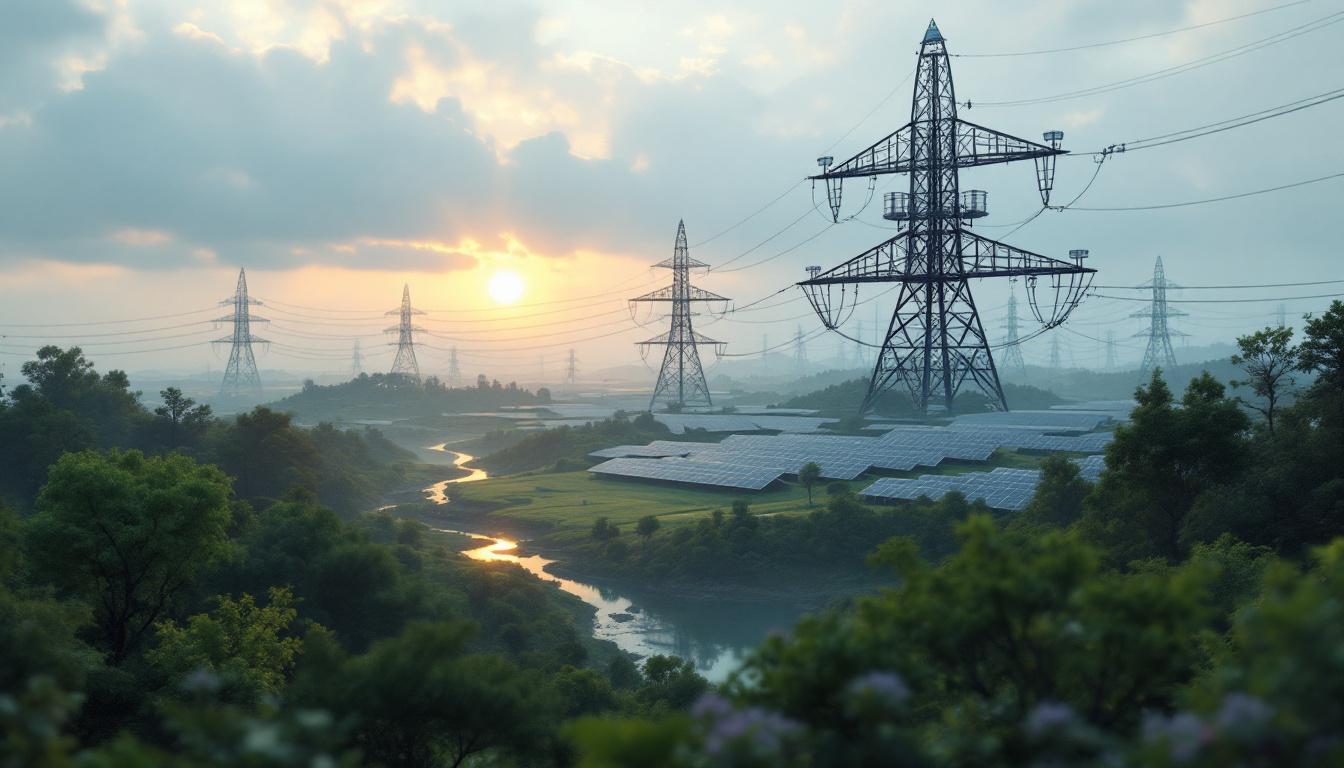
Global utilities have committed US$148 billion annually to upgrade power grids and expand energy storage, aiming to mobilise over US$1 trillion by 2030 to accelerate the energy transition and meet climate goals.
Global utilities have significantly increased their annual investment commitments towards the clean energy transition, raising the figure to US$148 billion per year, up from the previous target of US$117 billion. This updated commitment was announced by members of the Utilities for Net Zero Alliance (UNEZA) during COP30 in Belém, Brazil. Collectively, the alliance aims to mobilise over US$1 trillion in energy transition investments by 2030, marking a substantial escalation in the push for decarbonisation and energy system transformation.
Central to their strategy is a decisive shift in emphasis towards upgrading and expanding power grids and energy storage infrastructure. UNEZA members plan to invest approximately US$1.24 in grids and storage for every dollar spent on renewable energy generation. This prioritisation reflects the urgent need to address grid constraints, which are increasingly seen as the biggest bottleneck in the energy transition, especially in emerging and developing economies where resilient infrastructure is crucial for climate action, energy security, and sustainable growth.
The investment plans include the delivery of tens of thousands of kilometres of new and upgraded grid infrastructure alongside substantial battery storage projects. By 2030, members expect to more than triple their combined renewable energy capacity relative to 2023 levels. The annual breakdown of spending is expected to reach US$66 billion for renewables and US$82 billion for grids and storage, underscoring the vital role of modernised and flexible power systems in facilitating the integration of larger shares of renewable energy.
This announcement was made during a high-level ministerial meeting on grids, where governments and multilateral development banks (MDBs) endorsed new global Climate Finance Principles for Green Grids. Developed in consultation with leading banks and financial institutions, these principles aim to unlock greater pools of capital for grid projects in emerging economies, addressing a critical financing gap. Notable supporters include the African Development Bank, British International Investment, the Inter-American Development Bank, and the UK Government.
According to the COP30 CEO, Ana Toni, achieving global goals, such as tripling renewable energy capacity and doubling energy efficiency by 2030, will only be possible if power grids develop in tandem. She emphasised that UNEZA and the new financing principles are designed to translate global commitments into actionable progress by linking finance, policy, and implementation to build resilient power systems fit for a clean-energy future.
UNEZA, established under the UAE’s COP28 Presidency to overcome systemic obstacles in power system transformation, operates under the guidance of the International Renewable Energy Agency (IRENA) and the Climate High-Level Champions. Jasim Husain Thabet, Group CEO of TAQA and UNEZA co-chair, highlighted the alliance’s tangible delivery, noting that utilities are mobilising for the most significant infrastructure upgrade in a generation, aligned with previous COP pledges.
Likewise, Martin Pibworth, CEO of SSE and co-chair of UNEZA, welcomed the Brazilian Presidency’s focus on implementation, noting the alliance’s prior achievements, including building new grids stretching from Belém to New Zealand and new renewable capacity sufficient to meet half India’s peak demand. These accomplishments reflect real progress towards an energy transition that must continue at pace.
IRENA estimates that approximately US$670 billion annually is needed between now and 2030 to build and strengthen electricity grids required for system transformation, further underlining the scale of the challenge. Francesco La Camera, IRENA’s Director General, stressed the need for systemic change beyond merely adding wiring, calling for the creation of secure, affordable, and reliable power systems while fostering collaboration among regulators, utilities, planners, and ministries to attract the investment certainty investors require.
To accelerate this work, UNEZA announced a suite of delivery mechanisms to overcome barriers such as supply chain issues and capital flow restrictions. These include pooled procurement initiatives to aggregate demand across utilities with an initial focus on small island developing states, data-driven planning to unlock stranded renewable capacity, and consultations towards launching a global Investment Trust Fund to mobilise long-term capital for grid and renewable infrastructure. These mechanisms are intended to enhance economies of scale, lower equipment costs, improve regulatory frameworks, and facilitate access to finance.
The alliance is also partnering with the Global Clean Power Alliance (GCPA), led by the UK government, to address global power sector supply chain vulnerabilities. The GCPA has designated UNEZA as its key supply chain mission delivery partner, linking governments and utilities to bolster supply chain resilience.
Roaming beyond the utilities community, voices such as Robin Zeng, Chairman of CATL, recognise energy storage as a critical flexibility resource essential to realising the energy transition’s security and reliability objectives. Similarly, Dan Ioschpe, the Climate Change High-Level Champion for COP30, acknowledged the leadership and collaboration emerging from UNEZA as grounds for optimism, crediting their commitments to expanding renewables, strengthening grids, and deploying storage as pivotal corporate actions defining this decade.
In the broader market perspective, recent research projects that energy utility capital expenditures will exceed US$1 trillion between 2025 and 2029, focused on modernising generation, transmission, and distribution networks and integrating advanced technologies such as smart grids, electric vehicles, and cybersecurity. These investments are poised to support sustained profit growth and industry transformation, reinforcing the strategic importance of infrastructure development highlighted by UNEZA.
As COP30 concludes, the renewed investment plans and strategic frameworks unveiled by UNEZA members underscore a critical phase in industrial decarbonisation. They offer a practical pathway to scaling renewable capacity, modernising grids, and embedding storage solutions essential for meeting global climate goals and supporting resilient, sustainable energy systems worldwide.
- https://bioenergyinternational.com/global-utilities-set-out-us1-trillion-investment-plans/ – Please view link – unable to able to access data
- https://bioenergyinternational.com/global-utilities-set-out-us1-trillion-investment-plans/ – Global utilities have announced increased annual investment plans, raising their energy transition spending to US$148 billion per year, up from US$117 billion. This commitment, revealed by members of the Utilities for Net Zero Alliance (UNEZA) at COP30 in Belém, Brazil, aims to mobilise over US$1 trillion in energy transition investments by 2030. The focus is on power grids and networks, with utilities set to invest approximately US$1.24 in grids and storage for every dollar spent on renewable generation. The plan includes delivering tens of thousands of kilometres of new and upgraded grid infrastructure and battery storage, while more than tripling combined renewable energy capacity by 2030 compared to 2023 levels. Members will invest US$66 billion per year in renewables and US$82 billion in grids and storage.
- https://www.energyconnects.com/news/utilities/2025/november/global-utilities-set-out-1-trillion-investment-plans-at-cop30/ – At COP30, global utilities announced a significant increase in clean-energy spending, pledging US$148 billion annually towards the energy transition, marking a more than 25% rise from previous plans. This announcement, made by the Utilities for Net Zero Alliance (UNEZA), underscores a decisive shift towards power networks and storage. Governments and multilateral development banks (MDBs) simultaneously endorsed new global grid-financing principles intended to unlock capital for emerging economies. ([energyconnects.com](https://www.energyconnects.com/news/utilities/2025/november/global-utilities-set-out-1-trillion-investment-plans-at-cop30/?utm_source=openai))
- https://globalrenewablenews.com/article/energy/category/climate-change/155/1170972/global-utilities-set-out-usd-1-trillion-investment-plans-at-cop30-as-grid-spend-grows-.html – Global utilities have announced upgraded annual investment plans, increasing their energy transition spend to US$148 billion per year, up from US$117 billion. Revealed by members of the Utilities for Net Zero Alliance (UNEZA) at COP30, this commitment aims to mobilise over US$1 trillion in energy transition investments by 2030. The focus is on power grids and networks, with utilities set to invest approximately US$1.24 in grids and storage for every dollar spent on renewable generation. The plan includes delivering tens of thousands of kilometres of new and upgraded grid infrastructure and battery storage, while more than tripling combined renewable energy capacity by 2030 compared to 2023 levels. Members will invest US$66 billion per year in renewables and US$82 billion in grids and storage. ([globalrenewablenews.com](https://globalrenewablenews.com/article/energy/category/climate-change/155/1170972/global-utilities-set-out-usd-1-trillion-investment-plans-at-cop30-as-grid-spend-grows-.html?utm_source=openai))
- https://solarquarter.com/2025/11/17/global-utilities-boost-annual-clean-energy-investment-to-usd-148-billion-targeting-over-usd-1-trillion-by-2030-to-triple-renewable-capacity-and-expand-grids-storage/ – Global utility companies have increased their annual investment plans for the clean energy transition to US$148 billion, up from US$117 billion. These updated commitments were announced by the Utilities for Net Zero Alliance (UNEZA) at COP30. With this increase, UNEZA members expect to mobilise more than US$1 trillion in energy transition investments by 2030. A significant portion of the funding will go toward strengthening power grids and expanding energy storage. For every dollar invested in renewable energy generation, utilities will invest about US$1.24 in grids and storage. By 2030, UNEZA members plan to more than triple their renewable energy capacity compared with 2023, supported by yearly investments of US$66 billion in renewables and US$82 billion in grid and storage infrastructure. The announcement was made at a ministerial meeting in Belém, where governments and major development banks backed new Climate Finance Principles for Green Grids. These principles aim to unlock more financing for grid development in emerging economies. ([solarquarter.com](https://solarquarter.com/2025/11/17/global-utilities-boost-annual-clean-energy-investment-to-usd-148-billion-targeting-over-usd-1-trillion-by-2030-to-triple-renewable-capacity-and-expand-grids-storage/?utm_source=openai))
- https://www.downtoearth.org.in/climate-change/cop30-global-utilities-raise-annual-energy-transition-investment-to-148-billion-with-grids-taking-centre-stage-in-belem – At COP30, global utilities announced a major surge in clean-energy spending, pledging US$148 billion per year toward the energy transition—an increase of more than 25% from earlier plans—under the Utilities for Net Zero Alliance (UNEZA). The announcement, made at a high-level ministerial meeting on grids at COP30 in Belém, Brazil, underscores a decisive pivot toward power networks and storage. Governments and multilateral development banks (MDBs) simultaneously endorsed new global grid-financing principles intended to unlock capital for emerging economies. ([downtoearth.org.in](https://www.downtoearth.org.in/climate-change/cop30-global-utilities-raise-annual-energy-transition-investment-to-148-billion-with-grids-taking-centre-stage-in-belem?utm_source=openai))
- https://www.spglobal.com/market-intelligence/en/news-insights/research/energy-utility-capex-predicted-to-top-1-trillion-from-2025-through-2029 – Research indicates that energy utility capital expenditures are projected to exceed US$1 trillion from 2025 through 2029. This substantial investment is directed towards modernising generation, transmission, and distribution networks, as well as meeting new demand. Initiatives include constructing new natural gas, nuclear, solar, and wind power generation facilities, alongside integrating advanced technologies such as smart meters, smart grid systems, cybersecurity protocols, electric vehicles, and battery storage solutions. This significant capital outlay is anticipated to augment profit growth within the utility sector for the foreseeable future. ([spglobal.com](https://www.spglobal.com/market-intelligence/en/news-insights/research/energy-utility-capex-predicted-to-top-1-trillion-from-2025-through-2029?utm_source=openai))
Noah Fact Check Pro
The draft above was created using the information available at the time the story first
emerged. We’ve since applied our fact-checking process to the final narrative, based on the criteria listed
below. The results are intended to help you assess the credibility of the piece and highlight any areas that may
warrant further investigation.
Freshness check
Score:
10
Notes:
The narrative is current, with the latest publication date being 14 November 2025, aligning with the recent COP30 conference in Belém, Brazil. ([utilitiesfornetzero.org](https://www.utilitiesfornetzero.org/?utm_source=openai))
Quotes check
Score:
10
Notes:
Direct quotes from UNEZA co-chairs Jasim Husain Thabet and Martin Pibworth are consistent across multiple reputable sources, indicating originality. ([irena.org](https://www.irena.org/News/pressreleases/2025/Nov/Global-utilities-set-out-USD-1-trillion-investment-plans-at-COP30-as-grid-spend-grows?utm_source=openai))
Source reliability
Score:
10
Notes:
The narrative originates from the Utilities for Net Zero Alliance (UNEZA), a reputable organisation co-chaired by TAQA and SSE, with guidance from the International Renewable Energy Agency (IRENA) and the UN Climate Change High-Level Champions. ([irena.org](https://www.irena.org/News/pressreleases/2025/Nov/Global-utilities-set-out-USD-1-trillion-investment-plans-at-COP30-as-grid-spend-grows?utm_source=openai))
Plausability check
Score:
10
Notes:
The claims are plausible and corroborated by multiple reputable sources, including IRENA and the Green Grids Initiative, confirming the increased investment commitments and strategic focus on grid infrastructure. ([irena.org](https://www.irena.org/News/pressreleases/2025/Nov/Global-utilities-set-out-USD-1-trillion-investment-plans-at-COP30-as-grid-spend-grows?utm_source=openai))
Overall assessment
Verdict (FAIL, OPEN, PASS): PASS
Confidence (LOW, MEDIUM, HIGH): HIGH
Summary:
The narrative is current, originates from a reputable organisation, and presents plausible claims corroborated by multiple sources, indicating high credibility.
