


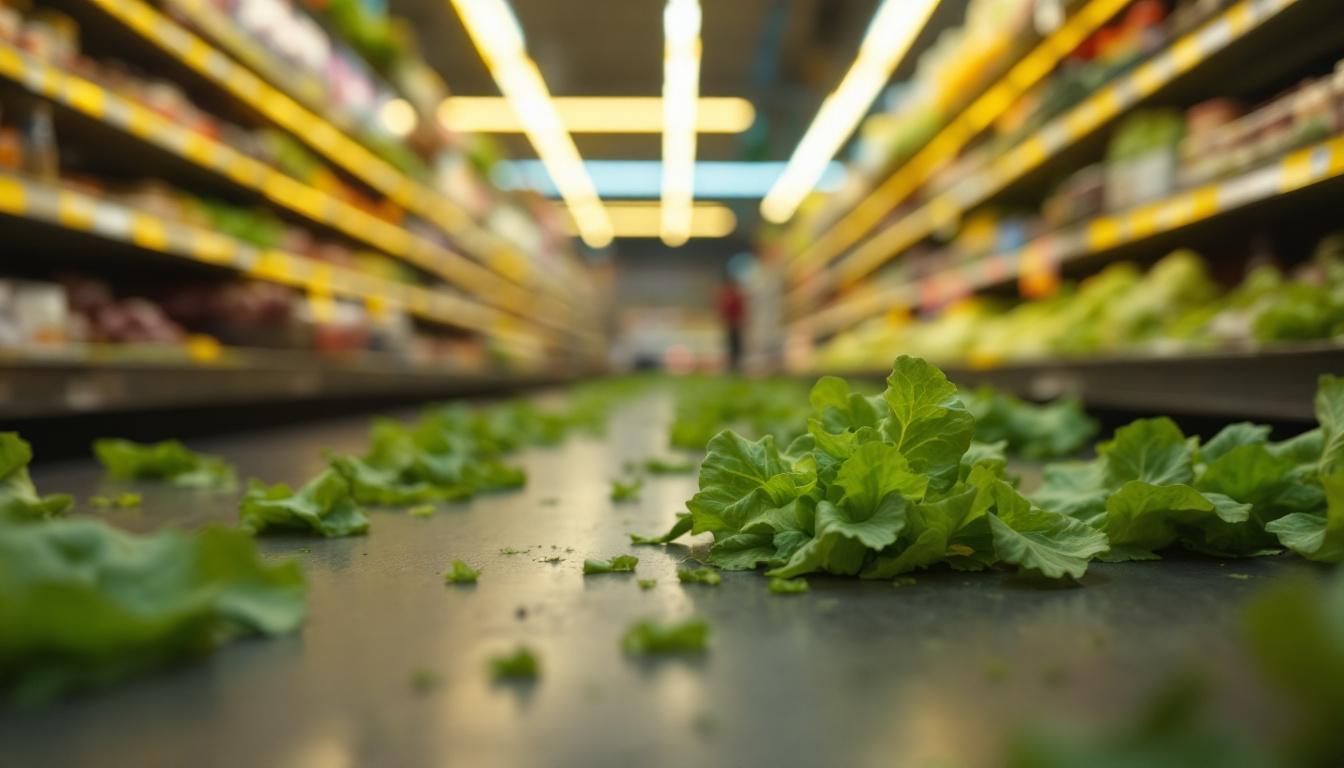
A new WWF report highlights stagnation in sustainability efforts among UK’s largest supermarkets, warning that failure to accelerate climate and nature commitments could threaten food prices and supply stability.
The UK’s biggest supermarkets risk worsening food-price inflation and supply shocks unless they urgently scale up action on climate change and nature loss, a new World Wide Fund for Nature (WWF) report warns.
According to the NGO’s annual What’s in Store for the Planet report, retailers’ progress in reducing environmental risk is “stagnating” and failing to deliver the systems-level change needed to protect long-term commercial viability. Drawing on data covering roughly 90% of the UK grocery market, the analysis highlights acute vulnerabilities across staple categories , from bread and milk to meat, fish, coffee and chocolate , driven by climate-driven yield shocks and habitat loss.
The report cites concrete impacts: over a year’s supply of bread was lost in the past decade because drought and heavy rainfall damaged wheat harvests; cocoa prices rose 136% between 2022 and 2024 as “excessive heat and shifting rainfall patterns” hit production; and global coffee prices climbed more than 40% in 2024 amid extreme weather, with models projecting up to a 50% reduction in land suitable for coffee by 2050. It also warns that soy, a key feed for poultry and livestock, remains heavily linked to deforestation in key sourcing regions , a systemic risk for protein supply and cost stability.
Retailers are reportedly far from meeting short-term sourcing targets. 2024 data in the report indicate only 1.8% of soy and 3.1% of cocoa from high‑risk areas were classed as deforestation and conversion‑free, leaving sector targets for 2025 out of reach. The WWF adds that Scope 3 emissions , the indirect emissions from supply chains that account for about 90% of supermarkets’ footprint , are not being cut quickly enough, and that failure to address agriculture, diets, food waste and deforestation will prevent meeting broader climate commitments.
There are, however, signs of progress on the narrower front of in‑house emissions: the sector is, on average, 49% of the way towards near‑term Scope 1 and 2 targets, up from 37% last year, and there has been a 10% rise in deforestation‑free palm oil sourcing. The report frames these gains as evidence that collective action can deliver resilience and price stability , but only if scaled across farming systems and commodity supply chains.
The WWF calls on supermarket boards to treat the failure to meet environmental commitments as an immediate commercial risk and to embed sustainability through procurement and strategic decision‑making. “The way we currently produce food is contributing to climate change and devastating our natural world,” said WWF CEO Tanya Steele. “It is only by protecting our environment that we can maintain our ability to grow healthy and affordable food for everyone. By not meeting their commitments supermarkets are playing with fire. For the good of their customers, and for their own commercial viability, retailers must act now to embed sustainability at every stage of their decision‑making. The clock is ticking.”
Industry bodies and retailers stress ongoing investment in carbon reduction, nature and biodiversity measures while balancing affordability pressures. The report’s findings underline the commercial imperative for the food retail sector: without faster, coordinated action across sourcing, farming standards and demand‑side measures (including protein diversification and waste reduction), supermarkets will face increasing supply volatility and cost exposure that could transmit directly to consumer prices and long‑term resilience of UK food supply.
- https://www.thegrocer.co.uk/news/supermarkets-playing-with-fire-as-climate-action-lags-wwf-warns/712706.article – Please view link – unable to able to access data
- https://www.thegrocer.co.uk/news/supermarkets-playing-with-fire-as-climate-action-lags-wwf-warns/712706.article – The World Wide Fund for Nature (WWF) has warned that UK supermarkets are failing to meet climate targets, leading to increased risks of price volatility and shortages in key products like bread, chocolate, milk, meat, fish, and coffee. The WWF’s annual ‘What’s in Store for the Planet’ report highlights that excessive heat and shifting rainfall patterns are driving up cocoa and coffee prices, while climate change-induced stress threatens milk production. The report also notes that supermarkets are not on track to meet 2025 targets for sourcing deforestation-free soy and cocoa, and are lagging in reducing indirect emissions from agriculture, diets, food waste, and deforestation. The WWF urges retailers to embed sustainability in their decision-making to ensure future food security and stable prices for consumers.
- https://www.wwf.org.uk/sites/default/files/2024-12/whats-in-store-for-the-planet-report-2024.pdf – The WWF’s ‘What’s in Store for the Planet’ report examines the environmental impact of UK shopping baskets, revealing that the global food system is responsible for 70% of nature loss and around a third of global greenhouse gas emissions. The report highlights that over 80% of UK consumers are concerned about these impacts and desire more sustainable shopping options. Despite this, the report indicates that major UK supermarkets are not on track to meet their 2030 goal of halving the environmental impact of shopping baskets, with significant progress needed in areas such as reducing greenhouse gas emissions and sourcing deforestation-free products.
- https://www.thecanary.co/global/world-analysis/2025/11/21/hidden-climate-cost-for-uk-food/ – Extreme heat in Brazil is severely impacting soy production, with every 1°C increase in global temperature estimated to reduce soy yields by approximately 6%. This poses a significant threat to the UK’s poultry market, as Brazil supplies a substantial portion of the UK’s chicken, which relies on soy feed. Additionally, Brazil provides up to 35% of the UK’s green coffee beans, and climate-induced droughts and heatwaves have led to a 13% rise in coffee prices in the UK. Other Brazilian exports, such as fruits and sugar, are also affected by water shortages and higher temperatures, leading to increased prices in the UK.
- https://www.standard.co.uk/news/environment/wwf-supermarkets-retailers-b1197711.html – A report from environmental charity WWF warns that UK supermarkets are off track to meet their goal of halting deforestation from food by 2025. The report highlights that retailers are falling behind on targets to reduce the environmental impact of the average UK shopping basket, particularly in areas such as sourcing deforestation-free products and reducing greenhouse gas emissions. WWF urges immediate action from supermarkets to meet their climate commitments and ensure a sustainable food system.
- https://www.foodingredientsfirst.com/news/uk-food-inflation-outlook-impacts-2025 – The Food and Drink Federation (FDF) warns that the UK’s food and beverage sector could face a challenging inflation trend over the next two years. Food prices are predicted to rise by 5.7% by December 2025, before slowing to 3.1% by the end of 2026. Regulatory pressures are identified as the leading factors driving inflation, with climate change and changing consumer purchasing habits also contributing to increased food costs. The FDF calls on the government to reduce existing cost pressures to protect UK food security.
- https://www.wwf.org.uk/sites/default/files/2023-12/Whats-in-Store-for-the-Planet-full-report-2023.pdf – The WWF’s ‘What’s in Store for the Planet’ report provides an overview of progress towards halving the environmental impact of UK shopping baskets by 2030. The report indicates that while some progress has been made, retailers are still a long way from meeting the 2030 goal. It highlights the need for urgent improvement in data provision to guide accelerated action against climate and nature impacts. The report covers seven areas for action: climate, deforestation and conversion, agriculture, marine, diets, food waste, and packaging.
Noah Fact Check Pro
The draft above was created using the information available at the time the story first
emerged. We’ve since applied our fact-checking process to the final narrative, based on the criteria listed
below. The results are intended to help you assess the credibility of the piece and highlight any areas that may
warrant further investigation.
Freshness check
Score:
8
Notes:
The narrative is based on a recent WWF report published three weeks ago, indicating high freshness. However, similar reports from WWF and other organisations have been released in the past, such as the 2024 report highlighting supermarkets’ failure to meet climate commitments. ([standard.co.uk](https://www.standard.co.uk/news/environment/wwf-supermarkets-retailers-b1197711.html?utm_source=openai)) This suggests that while the content is current, the underlying issues have been ongoing.
Quotes check
Score:
9
Notes:
The direct quotes from WWF CEO Tanya Steele in the narrative are consistent with her statements in the 2024 report, indicating that the quotes are reused. ([standard.co.uk](https://www.standard.co.uk/news/environment/wwf-supermarkets-retailers-b1197711.html?utm_source=openai)) This suggests that the narrative may be recycling content from previous reports.
Source reliability
Score:
9
Notes:
The narrative originates from The Grocer, a reputable UK trade publication, which strengthens its reliability. However, the reliance on a single source for the report’s findings introduces some uncertainty.
Plausability check
Score:
8
Notes:
The claims about supermarkets’ environmental impact and the need for urgent action are plausible and align with previous reports on the subject. The narrative lacks specific details on which supermarkets are failing to meet commitments, which could be seen as a lack of supporting detail. Additionally, the tone is consistent with typical corporate language, and there are no excessive or off-topic details, suggesting the narrative is focused and plausible.
Overall assessment
Verdict (FAIL, OPEN, PASS): FAIL
Confidence (LOW, MEDIUM, HIGH): MEDIUM
Summary:
The narrative is based on a recent WWF report, indicating high freshness. However, it recycles quotes from previous reports, suggesting a lack of originality. The reliance on a single source introduces some uncertainty, and the lack of specific details on which supermarkets are failing to meet commitments reduces the plausibility of the claims. Therefore, the overall assessment is ‘FAIL’ with medium confidence.
