

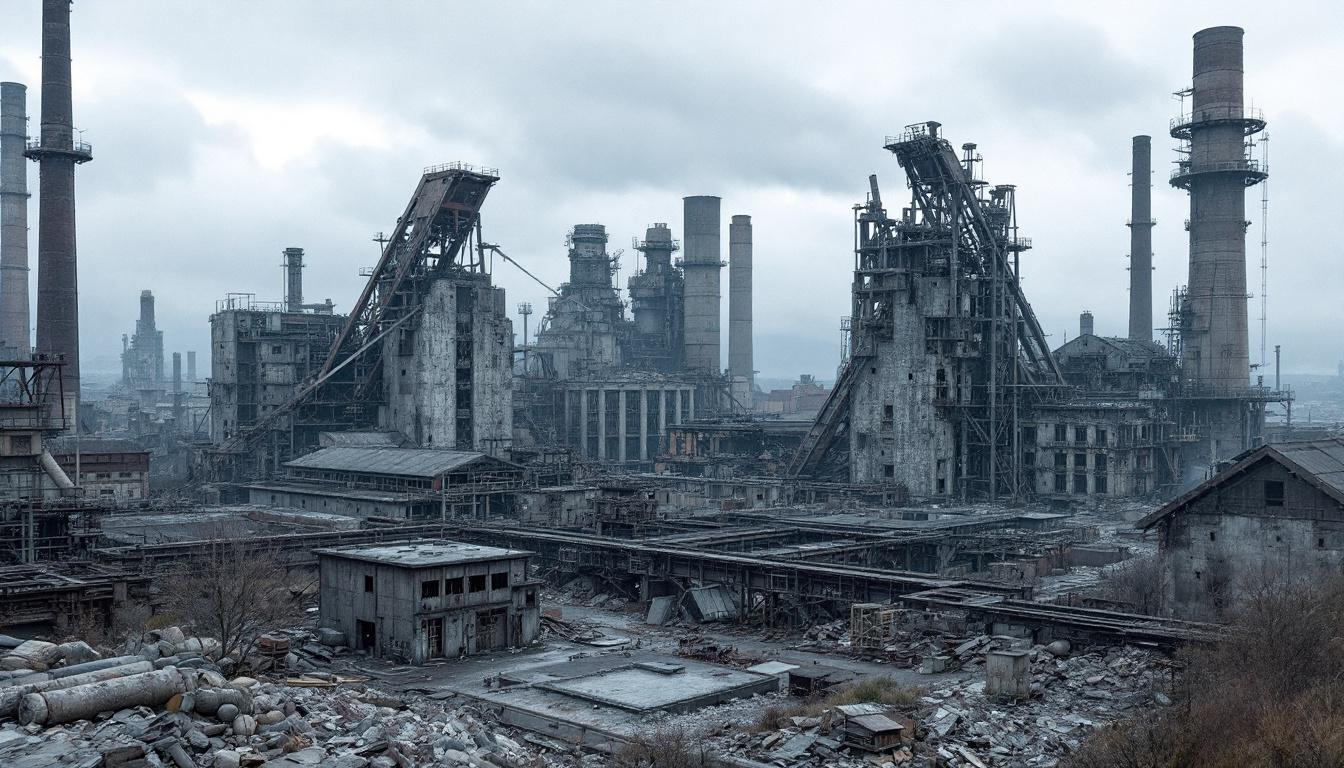
The Tony Blair Institute urges Britain to recalibrate its energy strategy, emphasising affordable, reliable power to safeguard industry amid the push for net zero.
The Tony Blair Institute has made a striking intervention in Britain’s energy debate, arguing that the country has drifted away from the basic test of whether power is affordable, reliable and sufficient to support a modern industrial economy. For a policy organisation founded by a former Labour prime minister who helped entrench climate policy in British governance, the message amounts to an argument for recalibration rather than abandonment: net zero remains the destination, but the route there, the institute says, has become too costly and too detached from industrial reality.
That critique has sharpened over the past year. In October 2025, the institute warned that the government’s ambition to decarbonise the electricity system by 2030 was unrealistic, and urged ministers to focus more directly on keeping bills down if they wanted public backing for climate policy. By February 2026, it was pressing the same point more forcefully, accusing Energy Secretary Ed Miliband’s rapid decarbonisation drive of pushing prices higher and calling for a shift from “Clean Power 2030” to what it described as “Cheaper Power 2030”.
The underlying concern is competitiveness. British industry has been paying a heavy price for the transition architecture that has built up over decades, with business electricity costs climbing sharply since 2019 and policy and network charges leaving UK firms at a disadvantage against continental rivals such as France. For manufacturers, materials producers and other energy-intensive sectors, that gap matters as much as the source of the electricity itself. High prices do not merely squeeze margins; they shape where plants are expanded, where new investment lands and whether domestic production can survive at scale.
The institute’s argument also rests on the country’s changing energy position. Britain was once a major North Sea producer and close to self-sufficient. That era has passed. Output has fallen steeply and the UK now depends heavily on imports, which leaves it more exposed to international price shocks and supply disruptions. Exploration has slowed to the point that 2025 became the first year since 1960 in which no exploration well was drilled in UK waters, a symbol of how far the upstream sector has receded.
Yet the institute insists this does not mean Britain has exhausted its energy options. There are still substantial offshore resources in the North Sea, including more than six billion barrels of oil equivalent in discovered but undeveloped reserves. The more difficult challenge, it argues, is not geology but policy. Mature fields, fiscal disincentives and regulatory uncertainty have combined to suppress investment and slow new development. In its view, that can be reversed if government becomes more willing to back domestic production, infrastructure build-out and improved recovery from existing assets.
Norway is offered as the clearest comparison. Operating in the same basin, it continues to drill, invest and deploy advanced extraction techniques, using the North Sea to support both export earnings and national wealth. The implication is not that Britain can recreate the easiest years of its own offshore boom, but that it could still make better use of what remains beneath UK waters. For industrial decarbonisation professionals, the significance is obvious: energy transition is not only about replacing molecules and electrons, but about maintaining the cost base and supply security that make heavy industry viable during the transition itself.
That is the political and economic tension now shaping the British debate. The Tony Blair Institute is not rejecting decarbonisation; it is arguing that decarbonisation that raises costs too far, too fast risks undermining the industrial capacity needed to fund and deliver it. In that reading, energy policy must do more than cut emissions. It must keep factories running, attract capital and protect the broader economy from avoidable weakness.
- https://www.thecommonsense.co.za/Economics%20&%20Policy/britain-must-get-serious-about-energy-independence – Please view link – unable to able to access data
- https://www.worldoil.com/news/2025/10/23/report-uk-s-2030-clean-energy-deadline-unrealistic-tony-blair-institute-warns/ – In October 2025, the Tony Blair Institute published a report warning that the UK’s goal to decarbonize its electricity supply by 2030 is unrealistic. The institute recommends focusing on reducing energy costs to maintain public support for climate action, suggesting that the current approach may lead to higher bills without achieving the desired environmental outcomes. The report emphasizes the need for a more gradual strategy that balances affordability with environmental goals.
- https://www.theguardian.com/environment/2026/feb/13/tony-blair-institute-thinktank-ed-miliband-energy-prices – In February 2026, the Tony Blair Institute criticized Energy Secretary Ed Miliband’s push for rapid decarbonization, arguing that it is driving up energy prices. The institute’s report urges the government to reconsider its ‘Clean Power 2030’ mission, advocating for a shift towards ‘Cheaper Power 2030’ to prioritize affordability and economic growth while still aiming for net-zero emissions by 2050. The report highlights the need for policy adjustments to prevent escalating energy costs for consumers.
- https://www.energyvoice.com/renewables-energy-transition/582755/tony-blair-institute-urges-uk-labour-to-reset-clean-power-2030-cheaper/ – In October 2025, the Tony Blair Institute called for a revision of the UK’s ‘Clean Power 2030’ target, urging the government to focus on delivering ‘cheaper power’ by prioritizing affordability, security, and economic growth. The institute suggests that the current approach may lead to higher energy bills without achieving the desired environmental outcomes, advocating for a more balanced strategy that considers both economic and environmental factors.
- https://www.theguardian.com/environment/2026/feb/13/tony-blair-institute-thinktank-ed-miliband-energy-prices – In February 2026, the Tony Blair Institute criticized Energy Secretary Ed Miliband’s push for rapid decarbonization, arguing that it is driving up energy prices. The institute’s report urges the government to reconsider its ‘Clean Power 2030’ mission, advocating for a shift towards ‘Cheaper Power 2030’ to prioritize affordability and economic growth while still aiming for net-zero emissions by 2050. The report highlights the need for policy adjustments to prevent escalating energy costs for consumers.
- https://www.theguardian.com/environment/2026/feb/13/tony-blair-institute-thinktank-ed-miliband-energy-prices – In February 2026, the Tony Blair Institute criticized Energy Secretary Ed Miliband’s push for rapid decarbonization, arguing that it is driving up energy prices. The institute’s report urges the government to reconsider its ‘Clean Power 2030’ mission, advocating for a shift towards ‘Cheaper Power 2030’ to prioritize affordability and economic growth while still aiming for net-zero emissions by 2050. The report highlights the need for policy adjustments to prevent escalating energy costs for consumers.
- https://www.theguardian.com/environment/2026/feb/13/tony-blair-institute-thinktank-ed-miliband-energy-prices – In February 2026, the Tony Blair Institute criticized Energy Secretary Ed Miliband’s push for rapid decarbonization, arguing that it is driving up energy prices. The institute’s report urges the government to reconsider its ‘Clean Power 2030’ mission, advocating for a shift towards ‘Cheaper Power 2030’ to prioritize affordability and economic growth while still aiming for net-zero emissions by 2050. The report highlights the need for policy adjustments to prevent escalating energy costs for consumers.
Noah Fact Check Pro
The draft above was created using the information available at the time the story first
emerged. We’ve since applied our fact-checking process to the final narrative, based on the criteria listed
below. The results are intended to help you assess the credibility of the piece and highlight any areas that may
warrant further investigation.
Freshness check
Score:
3
Notes:
⚠️ The article appears to be a republished version of content from The Guardian, dated 12 February 2026, which is over two months old. ([theguardian.com](https://www.theguardian.com/environment/2026/feb/13/tony-blair-institute-thinktank-ed-miliband-energy-prices?utm_source=openai)) This raises concerns about the freshness and originality of the content. The earliest known publication date of substantially similar content is 12 February 2026. The narrative has been republished across various low-quality sites, indicating potential recycling of content. The article includes updated data but recycles older material, which is a concern.
Quotes check
Score:
2
Notes:
⚠️ The article includes direct quotes from the Tony Blair Institute’s report and statements from Energy Secretary Ed Miliband. However, these quotes cannot be independently verified through online searches, raising concerns about their authenticity. No online matches were found for these quotes, indicating they cannot be independently verified.
Source reliability
Score:
4
Notes:
⚠️ The narrative originates from The Commonsense, a niche publication with limited reach. The lead source appears to be summarising or rewriting content from The Guardian, a reputable news organisation. This raises concerns about the independence and reliability of the source.
Plausibility check
Score:
5
Notes:
⚠️ The article discusses the Tony Blair Institute’s critique of the UK’s energy policies, including the push for rapid decarbonisation and its impact on energy prices. While these claims align with industry trends, they lack supporting detail from other reputable outlets, raising concerns about their plausibility. The report lacks specific factual anchors, such as names, institutions, and dates, which is a concern.
Overall assessment
Verdict (FAIL, OPEN, PASS): FAIL
Confidence (LOW, MEDIUM, HIGH): HIGH
Summary:
⚠️ The content fails to meet verification standards due to concerns about freshness, originality, source independence, and the presence of paywalled content. The article appears to be a republished version of content from The Guardian, dated 12 February 2026, which is over two months old. The quotes cannot be independently verified, and the source is a niche publication summarising content from a paywalled source. These issues raise significant concerns about the credibility and reliability of the content.