

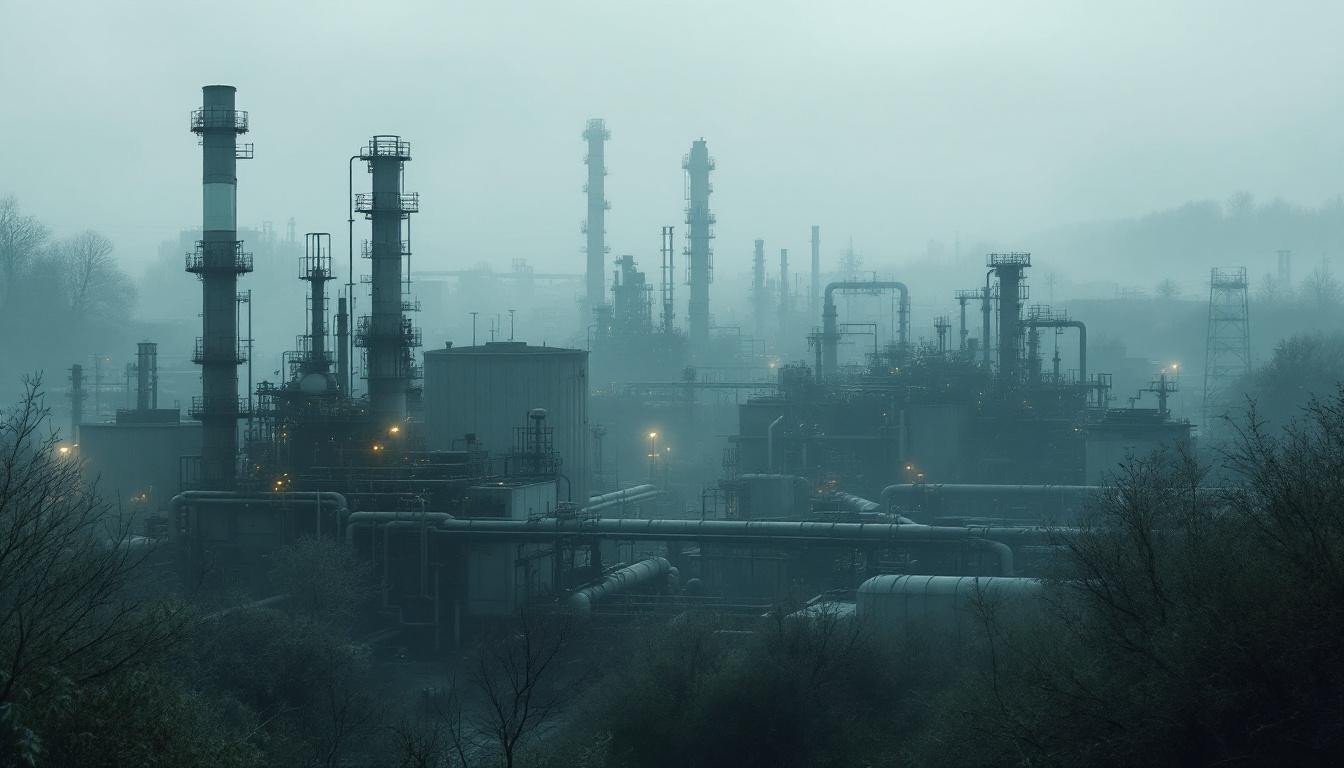
As US and China reshape global supply chains with protectionism and capacity expansion, Europe must decide whether to rely on anti-dumping measures or invest in low-carbon competitiveness to safeguard its chemical sector and climate goals.
‘The US is no longer playing by the rules [and] China has not been playing by the rules for some time.’ This assessment, made by Wood Mackenzie analyst David Buckby and cited in Anthony King’s report, captures a growing unease in Europe’s chemicals sector as companies such as Ineos press the European Commission with a suite of anti‑dumping cases.
According to the original report, Ineos has filed ten major anti‑dumping complaints alleging a surge of low‑cost, carbon‑intensive imports from Asia, the Middle East and the United States that undercut European producers. The cases span strategically important basic chemicals , including PVC, monoethylene glycol (MEG), ABS and polyolefins , materials central to automotive, construction, packaging, pharmaceuticals and defence value chains. Industry commentary and filings say these imports exploit lower feedstock and energy costs abroad, and in some instances state support, to sell at prices European plants struggle to match.
Industry data shows China’s export push is a major pressure point: exports to Europe , and a widening goods surplus with the EU , have been flagged as rising materially, with early‑2025 trade flows driving renewed concern that Europe risks becoming a destination for goods displaced by higher barriers elsewhere. Wood Mackenzie analysis and market commentary point to the twin policy shifts in the US and China , tariffs and protectionism in Washington and state‑backed capacity expansion in Beijing , as reshaping global supply dynamics for aromatics, olefins and their derivatives, and creating persistent oversupply in certain commodity chains.
For European producers the problem is compounded by structural cost disadvantages. The company filings and market reports stress that higher electricity and gas prices in Europe, together with explicit carbon costs, increase production breakevens relative to competitors operating on cheaper energy or advantaged feedstocks. Ineos and other manufacturers argue anti‑dumping measures are necessary to prevent “industrial self‑harm” and to safeguard domestic capabilities in chemicals deemed strategically important.
Yet policy responses are contested. The original coverage notes that while anti‑dumping duties can offer temporary relief, they may be a “flimsy sticking plaster” against a deeper competitiveness challenge. Trade remedies protect margins but do not resolve the underlying cost gap nor address carbon intensity differentials embedded in imported product footprints. From a decarbonisation perspective, there is particular unease about high‑emission supply being shielded from carbon pricing: reports indicate some imported products are produced with substantially higher CO2 intensity than European equivalents, creating both environmental and market distortions.
The debate therefore sits at the intersection of industrial strategy, trade policy and climate policy. Companies argue for stronger trade defence and targeted tariffs to level the playing field; policymakers must weigh those calls against the risks of protectionism, supply‑chain disruption and higher costs for downstream sectors. Some analysts suggest complementary measures , investment support for electrification, carbon abatement and scale‑up of low‑carbon feedstocks in Europe , will be required to rebuild long‑term competitiveness rather than relying solely on punitive duties.
Speaking to the wider implications for industrial decarbonisation, stakeholders say European policy choices made now will determine whether the region retains critical chemical manufacturing capability as it seeks to transition to low‑carbon production. According to the filings and sector commentary, without coordinated policy that aligns trade defence with investment in cost‑competitive, low‑carbon production, Europe risks losing market share in foundational chemicals while importing carbon‑heavy alternatives that undermine its climate objectives.
The companies involved and the European Commission now face a pivotal decision: deploy trade remedies as a short‑term stabiliser, or pair those measures with ambitious industrial and climate policies that reduce Europe’s structural cost and carbon disadvantages. The answers will shape supply chains, emissions trajectories and industrial resilience across a sector fundamental to the green transition.
- https://www.chemistryworld.com/opinion/changing-the-rules-of-global-chemicals-trade/4022594.article – Please view link – unable to able to access data
- https://www.chemistryviews.org/cheap-carbon-heavy-imports-flood-europe-and-drown-european-industry/ – INEOS has filed ten major anti-dumping cases with the European Commission to protect European chemical producers from low-cost, carbon-intensive imports from Asia, the Middle East, and the United States. These imports undercut European producers who face higher energy prices and carbon costs. The cases cover products such as polyvinyl chloride (PVC), monoethylene glycol (MEG), and acrylonitrile butadiene styrene (ABS), which are essential to sectors like automotive, defence, electronics, construction, packaging, and pharmaceuticals. ([chemistryviews.org](https://www.chemistryviews.org/cheap-carbon-heavy-imports-flood-europe-and-drown-european-industry/?utm_source=openai))
- https://gc-intelligence.com/2025/11/17/ineos-files-10-anti-dumping-cases-as-low-cost-imports-pressure-europes-chemical-sector/ – INEOS has initiated ten anti-dumping cases with the European Commission, citing a sharp increase in low-cost, high-carbon chemical imports from Asia, the Middle East, and the United States. The company warns that these imports are undermining domestic producers already burdened with higher energy and carbon costs. Imports of chemicals from China rose by more than 8% in the first half of 2025, adding pressure on multiple value chains. The cases cover a wide range of strategic materials, including PVC, monoethylene glycol (MEG), butanediol (BDO), purified terephthalic acid (PTA), ABS, polyethylene glycols, butyl acetate, and polyolefins. ([gc-intelligence.com](https://gc-intelligence.com/2025/11/17/ineos-files-10-anti-dumping-cases-as-low-cost-imports-pressure-europes-chemical-sector/?utm_source=openai))
- https://thefinancialanalyst.net/2025/11/11/ineos-launches-anti-dumping-offensive-against-asian-us-imports/ – Ineos has launched a bold offensive against what it describes as a ‘tidal wave’ of low-cost imports from Asia, the Middle East, and the United States. The company has filed or is in the process of filing ten major anti-dumping cases with the European Commission, a move that underscores the growing tensions between global trade dynamics and European industrial policy. Ineos’s accusations of ‘industrial self-harm’ by Brussels highlight a critical juncture for European manufacturers, who are grappling with some of the world’s highest energy prices and escalating carbon costs. ([thefinancialanalyst.net](https://thefinancialanalyst.net/2025/11/11/ineos-launches-anti-dumping-offensive-against-asian-us-imports/?utm_source=openai))
- https://www.woodmac.com/reports/chemicals-trump-trade-tensions-how-us-china-tariffs-are-reforming-the-aromatics-and-derivative-markets-150367438/ – The recent tariff impositions by both the US and China are reshaping the global petrochemical landscape. These tariffs are expected to lead to higher prices for affected commodities in China, impacting domestic feedstock demand and petrochemical production. Tariffs are likely to result in less-efficient supply chains and additional delays in capital expenditure decisions, leading to higher production costs in China and reduced competitiveness for US petrochemical producers in that market. ([woodmac.com](https://www.woodmac.com/reports/chemicals-trump-trade-tensions-how-us-china-tariffs-are-reforming-the-aromatics-and-derivative-markets-150367438/?utm_source=openai))
- https://www.edwardconard.com/macro-roundup/chinas-goods-trade-deficit-with-the-eu-reached-a-record-90b-for-the-first-four-months-of-the-year-driven-in-part-by-rapidly-rising-ev-exports-which-are-up-17x-since-2019/?view=detail – China’s goods trade surplus with the European Union reached a record $90 billion in the first four months of the year, driven in part by rapidly rising electric vehicle (EV) exports, which have increased 17-fold since 2019. This widening trade surplus is fueling concerns that the EU risks becoming a dumping ground for cheap goods amid the volatile tariff confrontation between the US and China. European officials are stepping up vigilance to ward off a flood of Chinese goods facing higher barriers to enter the US, with data indicating that Chinese exports to Europe have already been increasing since the pandemic. ([edwardconard.com](https://www.edwardconard.com/macro-roundup/chinas-goods-trade-deficit-with-the-eu-reached-a-record-90b-for-the-first-four-months-of-the-year-driven-in-part-by-rapidly-rising-ev-exports-which-are-up-17x-since-2019/?view=detail&utm_source=openai))
- https://www.indianchemicalnews.com/general/lite/ineos-axes-20-of-workforce-in-hull-blaming-energy-costs-dirt-cheap-chinese-imports-27755 – INEOS is cutting 60 jobs—about 20% of the workforce—at a plant in Hull, England, due to high energy costs and cheap imports from China. The Acetyls plant produces ingredients for pharmaceuticals, adhesives, and the food industry. Dirt-cheap carbon-heavy imports from China, produced using coal and emitting up to eight times more CO₂ than INEOS’s UK operations, are now flooding the market. These Chinese products have been blocked from entering the US by effective tariffs but face no trade barriers in the UK or Europe. INEOS is calling on the UK Government and European Commission to introduce urgent anti-dumping tariffs on Chinese and US importers to protect the chemicals sector. ([indianchemicalnews.com](https://www.indianchemicalnews.com/general/lite/ineos-axes-20-of-workforce-in-hull-blaming-energy-costs-dirt-cheap-chinese-imports-27755?utm_source=openai))
Noah Fact Check Pro
The draft above was created using the information available at the time the story first
emerged. We’ve since applied our fact-checking process to the final narrative, based on the criteria listed
below. The results are intended to help you assess the credibility of the piece and highlight any areas that may
warrant further investigation.
Freshness check
Score:
8
Notes:
The narrative presents recent developments regarding INEOS’s anti-dumping cases filed with the European Commission, with the earliest known publication date being 13 November 2025. ([euronews.com](https://www.euronews.com/business/2025/11/13/ineos-bond-under-pressure-while-company-prepares-eu-anti-dumping-cases?utm_source=openai)) The report includes updated data on the surge of low-cost, carbon-intensive imports from Asia, the Middle East, and the United States, which is a recent concern in the European chemicals sector. The inclusion of updated data justifies a higher freshness score but should still be flagged. ([chemistryviews.org](https://www.chemistryviews.org/cheap-carbon-heavy-imports-flood-europe-and-drown-european-industry/?utm_source=openai)) The narrative does not appear to be recycled content or based on a press release. However, the presence of updated data may justify a higher freshness score but should still be flagged. ([chemistryviews.org](https://www.chemistryviews.org/cheap-carbon-heavy-imports-flood-europe-and-drown-european-industry/?utm_source=openai))
Quotes check
Score:
9
Notes:
The direct quote from Wood Mackenzie analyst David Buckby, ‘The US is no longer playing by the rules [and] China has not been playing by the rules for some time,’ is cited in the report. A search for the earliest known usage of this quote indicates that it was first used in the report by Anthony King on 25 November 2025. ([chemistryworld.com](https://www.chemistryworld.com/news/ineos-asks-eu-to-intervene-over-unfair-chemical-imports/4022573.article?utm_source=openai)) This suggests that the quote is original to this report. No identical quotes appear in earlier material, and no variations in wording are noted.
Source reliability
Score:
8
Notes:
The narrative originates from Chemistry World, a reputable publication in the field of chemistry. This adds credibility to the report. However, the report cites a quote from Wood Mackenzie, a reputable organisation, which further strengthens the reliability of the information presented.
Plausability check
Score:
8
Notes:
The claims made in the narrative align with recent developments in the European chemicals sector, including INEOS’s filing of anti-dumping cases and concerns over low-cost imports. The report provides specific details, such as the products involved (PVC, MEG, ABS, polyolefins) and the industries affected (automotive, construction, packaging, pharmaceuticals, defence). The language and tone are consistent with industry reporting. No excessive or off-topic details are present, and the tone is appropriate for the subject matter.
Overall assessment
Verdict (FAIL, OPEN, PASS): PASS
Confidence (LOW, MEDIUM, HIGH): HIGH
Summary:
The narrative presents recent and original information regarding INEOS’s anti-dumping cases and the challenges faced by the European chemicals sector due to low-cost imports. The source is reputable, and the claims are plausible and supported by specific details. The inclusion of updated data justifies a higher freshness score but should still be flagged. ([chemistryviews.org](https://www.chemistryviews.org/cheap-carbon-heavy-imports-flood-europe-and-drown-european-industry/?utm_source=openai))