

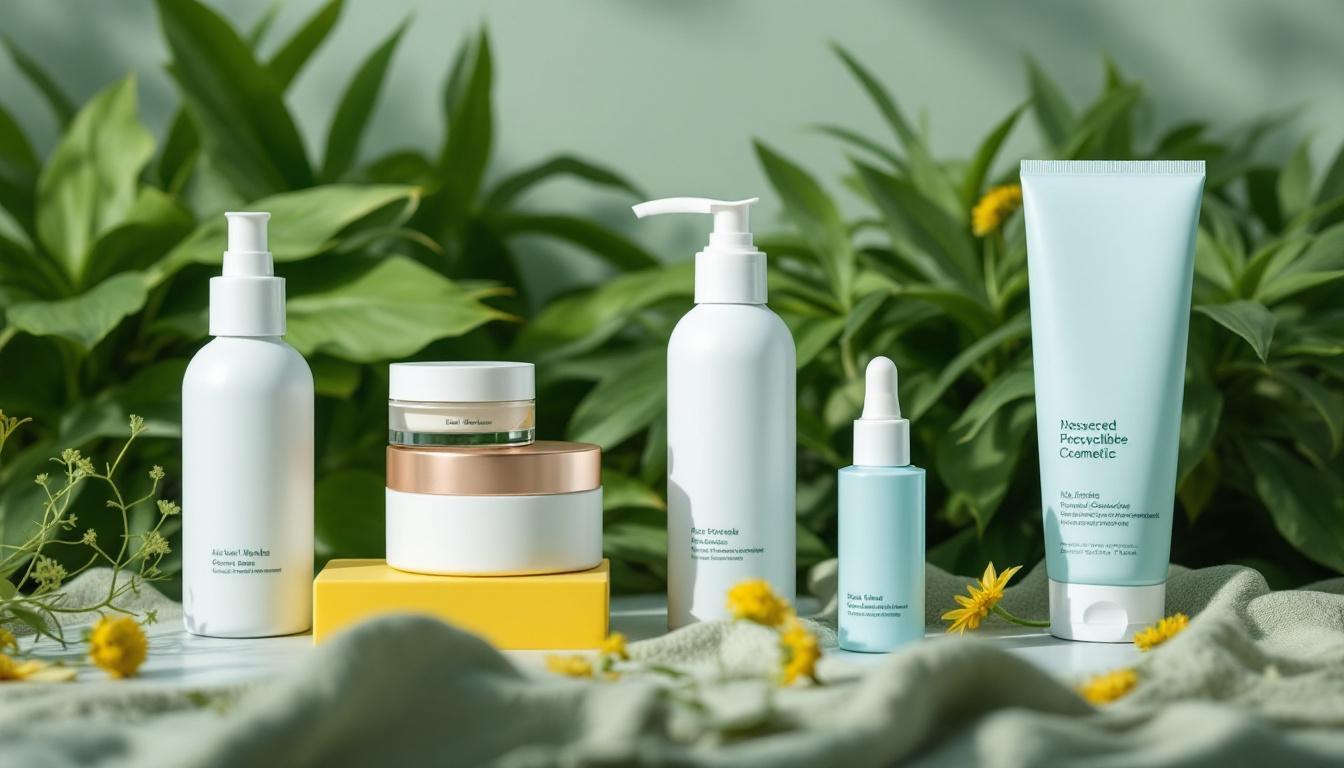
As global regulations tighten and consumer demand grows, the beauty industry is shifting towards redesigned, recyclable, and reusable packaging systems, transforming sustainability from a branding tactic into a core industrial challenge.
Cosmetic packaging has become one of the beauty industry’s most visible sustainability failures, and the pressure to change is now coming from regulators, retailers and procurement teams as much as from consumers. Industry estimates suggest more than 120 billion cosmetic packs are produced globally each year, with much of that material discarded within months. That is pushing packaging from a branding afterthought into a core industrial decarbonisation issue.
The shift is not just about swapping out one material for another. It is about redesigning packaging systems around verified recycled content, better end-of-life outcomes and lower material intensity. Researchers writing in the journal Cosmetics note that most cosmetic packs still rely on plastics and mixed-material formats that are difficult to recover, while also emphasising that waste is created across the full chain, from raw material extraction to disposal. That makes packaging a problem of manufacturing, logistics and regulation, not simply consumer behaviour.
The compliance landscape is tightening accordingly. The European Union’s packaging rules are moving toward higher recycled content, greater recyclability and more standardised reuse models. In the UK and the US, anti-greenwashing scrutiny is also making broad environmental claims harder to defend without evidence on composition, traceability and disposal pathways. For beauty brands, that means sustainability claims now need to be backed by engineering data, not marketing language.
Consumer demand is still part of the story. GCI Magazine reported that more than three-quarters of US shoppers placed at least some importance on sustainably packaged cosmetics in 2023, while searches for upcycled products rose sharply. But the more important change is operational: brands are now being forced to prove that their packaging choices reduce impact in measurable ways.
That is where material selection matters. Post-consumer recycled plastic remains one of the most scalable options for mass-market products, particularly where durability and clarity are still required. Glass continues to suit premium and refillable applications because it is inert and can be recycled repeatedly without the same quality loss seen in many other materials. Aluminium is also gaining ground thanks to its strong barrier properties and high recyclability. Bamboo, bioplastics and calcium carbonate-filled polypropylene each have niches, but their value depends on how well they are matched to product type, shelf life and moisture exposure.
The more advanced brands are moving beyond material substitution altogether. Refillable packaging systems, where a durable outer shell is paired with replacement inserts, can significantly reduce packaging use over a product’s lifetime. Airless dispensing formats can also cut waste by helping consumers access more of the product and by protecting sensitive formulas without relying as heavily on preservatives. For skincare and premium beauty, those functional benefits increasingly matter as much as the environmental story.
Research published in Cosmetics also underlines that end-of-life design can materially affect impact. One study found that recycling polypropylene packaging at the end of its life can cut global warming potential by 38% compared with landfilling. That kind of figure is why manufacturers are placing greater emphasis on recyclability, mono-material design and energy use in production, rather than relying solely on recycled-content claims.
The broader implication is clear: sustainable cosmetic packaging is becoming an industrial design challenge with decarbonisation implications, not a niche branding exercise. Companies that build packaging strategies around verified materials, reuse models and regulatory readiness are likely to be better placed as compliance expectations rise and supply chains come under closer scrutiny.
- https://sustainablebusinessmagazine.net/business-review/the-green-packaging-revolution-how-eco-friendly-cosmetic-materials-are-reshaping-the-beauty-supply-chain/ – Please view link – unable to able to access data
- https://www.mdpi.com/2079-9284/11/4/110 – This article discusses the environmental impact of cosmetic packaging, highlighting that the expansion of the cosmetics industry has led to increased waste at all stages of production and disposal. It notes that most cosmetic packaging is made of plastics and non-recyclable composites, contributing to environmental degradation. The article emphasizes the need for sustainable packaging solutions, such as biodegradable materials and recycled plastics, to mitigate these impacts. It also mentions EU regulations aimed at reducing packaging waste and promoting the reuse of packaging through standardization and clear labeling.
- https://www.mdpi.com/2079-9284/11/2/34 – This study evaluates the environmental impacts of cosmetic packaging by investigating factors like volume, material composition, recycled content, energy usage, and disposal methods. It highlights that raw materials and production stages contribute significantly to environmental effects. The study recommends implementing energy-saving measures and renewable energy sources to mitigate environmental consequences. It also notes that 100% recycling at the end of life can reduce global warming potential by 38% compared to landfilling for polypropylene packaging. The article discusses various sustainable initiatives by cosmetic brands to improve packaging recycling rates.
- https://www.gcimagazine.com/packaging/production-manufacturing/article/22911517/cosmetic-packaging-trend-tracker-sustainability-x-functionality – This article reports that more than 75% of U.S. consumers placed some level of importance on sustainably packaged cosmetic products in 2023. It also notes a 34.6% year-over-year increase in searches for upcycled products and a rise in searches for chemical recycling centers. These trends indicate growing consumer awareness and demand for sustainable packaging solutions in the cosmetics industry.
- https://www.mdpi.com/2079-9284/11/4/110 – This article discusses the environmental impact of cosmetic packaging, highlighting that the expansion of the cosmetics industry has led to increased waste at all stages of production and disposal. It notes that most cosmetic packaging is made of plastics and non-recyclable composites, contributing to environmental degradation. The article emphasizes the need for sustainable packaging solutions, such as biodegradable materials and recycled plastics, to mitigate these impacts. It also mentions EU regulations aimed at reducing packaging waste and promoting the reuse of packaging through standardization and clear labeling.
- https://www.mdpi.com/2079-9284/11/2/34 – This study evaluates the environmental impacts of cosmetic packaging by investigating factors like volume, material composition, recycled content, energy usage, and disposal methods. It highlights that raw materials and production stages contribute significantly to environmental effects. The study recommends implementing energy-saving measures and renewable energy sources to mitigate environmental consequences. It also notes that 100% recycling at the end of life can reduce global warming potential by 38% compared to landfilling for polypropylene packaging. The article discusses various sustainable initiatives by cosmetic brands to improve packaging recycling rates.
- https://www.gcimagazine.com/packaging/production-manufacturing/article/22911517/cosmetic-packaging-trend-tracker-sustainability-x-functionality – This article reports that more than 75% of U.S. consumers placed some level of importance on sustainably packaged cosmetic products in 2023. It also notes a 34.6% year-over-year increase in searches for upcycled products and a rise in searches for chemical recycling centers. These trends indicate growing consumer awareness and demand for sustainable packaging solutions in the cosmetics industry.
Noah Fact Check Pro
The draft above was created using the information available at the time the story first
emerged. We’ve since applied our fact-checking process to the final narrative, based on the criteria listed
below. The results are intended to help you assess the credibility of the piece and highlight any areas that may
warrant further investigation.
Freshness check
Score:
7
Notes:
The article was published on April 20, 2026, making it current. However, similar content has appeared in other publications within the past year, such as PackagingBest’s article from last year and Topone Packaging’s article from two months ago. This suggests that the topic is actively covered, but the article’s originality is somewhat diminished. Additionally, the article appears to be a press release, which typically warrants a high freshness score. Nonetheless, the presence of similar content elsewhere raises questions about its originality. Given these factors, the freshness score is moderate.
Quotes check
Score:
5
Notes:
The article does not provide direct quotes from individuals or organizations. While it references studies and reports, specific sources are not cited, making independent verification challenging. The lack of verifiable quotes reduces the credibility of the information presented.
Source reliability
Score:
4
Notes:
The article originates from Sustainable Business Magazine, a niche publication. While it may be reputable within its niche, its limited reach and potential biases reduce its reliability. Additionally, the article appears to be a press release, which often lacks independent verification and may be biased towards promoting certain viewpoints.
Plausibility check
Score:
6
Notes:
The claims about the environmental impact of cosmetic packaging and the shift towards sustainable materials are plausible and align with industry trends. However, the article lacks specific data points and references to support these claims, making it difficult to fully assess their accuracy. The absence of supporting details from other reputable outlets raises concerns about the completeness and accuracy of the information.
Overall assessment
Verdict (FAIL, OPEN, PASS): FAIL
Confidence (LOW, MEDIUM, HIGH): MEDIUM
Summary:
The article presents plausible claims about the environmental impact of cosmetic packaging and the shift towards sustainable materials. However, it lacks direct quotes, specific data points, and references to independent sources, making independent verification challenging. Additionally, the article appears to be a press release from a niche publication, which may introduce biases and lacks the reliability of major news organizations. Given these factors, the content does not meet the necessary standards for factual reporting.